Ventilator Care at Home
Specialist respiratory support helping you live safely at home
0330 0436 899
Home ventilation care built around your life
Living with a ventilator can involve sophisticated equipment and carefully planned clinical support, but you remain a person first.
You still have routines, relationships, interests, ambitions and preferences that matter.
Our role is to combine the clinical support you require with the freedom to live as normally and independently as possible in your own home.
Before we begin a ventilator care package, we take time to understand your respiratory needs, prescribed ventilation, equipment, communication, mobility, medication, nutrition, personal care requirements and emergency arrangements.
Just as importantly, we learn about you.
What time do you like to get up? What helps you feel comfortable? Who is important to you? What do you enjoy doing? What level of independence do you want to maintain?
These details become part of your personalised care.

Looking for specialist ventilator care at home?
Talk to Verity Healthcare about a new care package, hospital discharge or changing enteral feeding needs.
What is home ventilation?
Home ventilation is respiratory support provided outside hospital to help a person breathe effectively when their own breathing is insufficient or requires assistance.
Some people need ventilation only while sleeping. Others may require support for longer periods during the day, while a smaller number of people depend on ventilation continuously.
The ventilator itself is prescribed and configured by the specialist respiratory or home ventilation team according to the person’s clinical needs.
Verity Healthcare works alongside those professionals to provide the day-to-day care, observation, support and clinical governance needed to help make prescribed ventilation manageable at home.
Home ventilation can be provided non-invasively through a mask or, for people with more complex needs, invasively through a tracheostomy.

Invasive and non-invasive ventilation care
Non-Invasive Ventilation
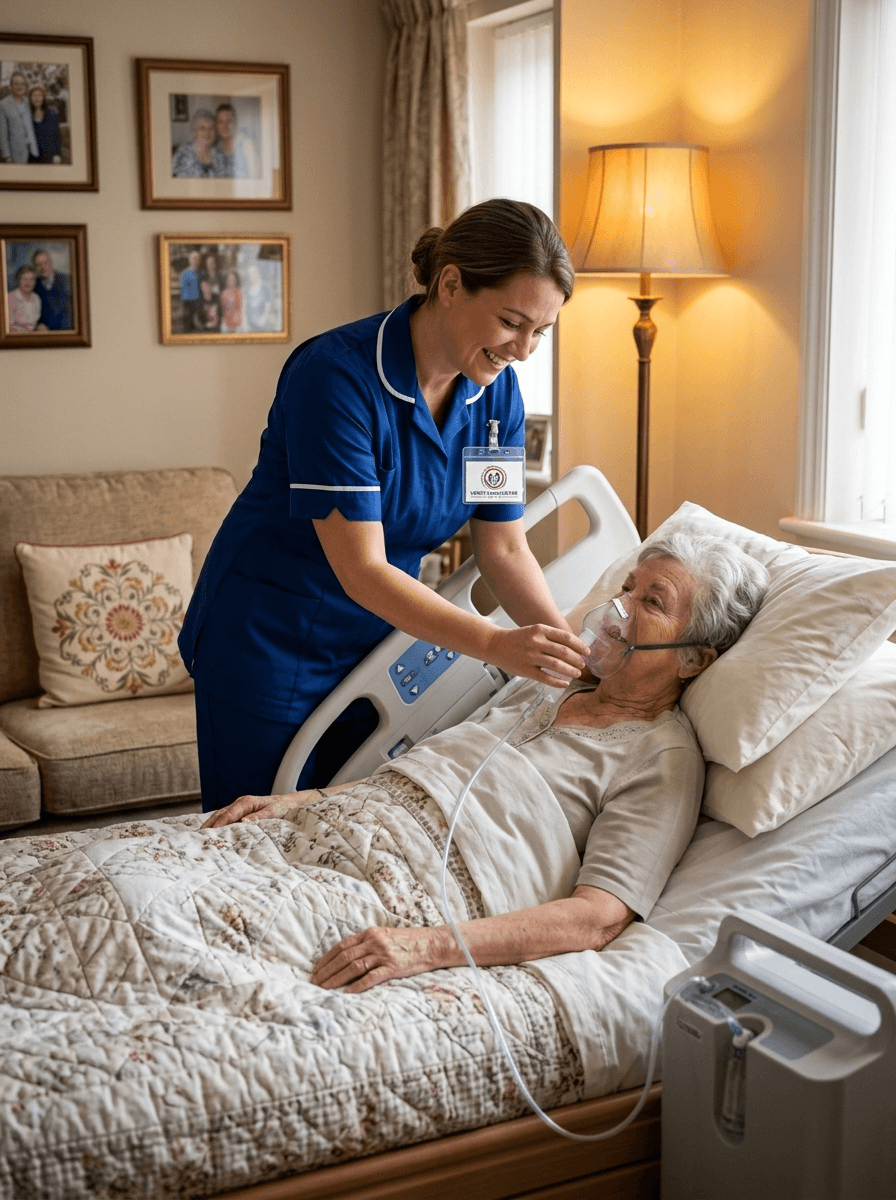
Non-invasive ventilation, commonly known as NIV, supports breathing without a tracheostomy.
A ventilator delivers prescribed pressure through an interface such as a nasal or full-face mask. Bilevel ventilation, sometimes referred to by terms such as BiPAP, is commonly used for people requiring long-term respiratory support.
Some people only use NIV overnight, while others require it for longer periods.
Our care team can support the person to use their prescribed equipment as set out in their individual respiratory and care plan, while monitoring comfort, equipment issues and changes that require escalation.
Invasive Ventilation
Invasive ventilation is delivered through a tracheostomy tube directly into the airway.
People requiring tracheostomy ventilation often have more complex respiratory needs and may need continuous or extended support.
Where this forms part of the commissioned package, our trained and competency-assessed carers can support agreed tracheostomy and airway procedures alongside ventilation, under appropriate clinical oversight.
Every package is individually assessed because ventilation requirements, equipment and emergency arrangements differ from one person to another.
Complex respiratory care. Humanly delivered.
Ventilator care requires attention to equipment, observations and clinical procedures.
But excellent care is about much more.
It is about helping someone sleep comfortably, enjoy breakfast with their family, go to school or university, work where possible, leave the house, pursue hobbies, spend time with friends and participate in everyday life.
At Verity Healthcare, clinical safety and quality of life belong together.
Nurse-led ventilator care at home
Ventilation is a specialist area of care.
Our nursing and clinical team helps ensure that each ventilator care package is carefully assessed, planned, implemented and reviewed.
Before a package begins, the relevant clinical information is gathered and the individual’s needs, ventilation arrangements, equipment, risks and wider healthcare requirements are reviewed.
Our nurses support the development of clear care and escalation plans and help coordinate training and competency assessment for carers undertaking delegated or specialist healthcare activities.
Once care is established, clinical oversight continues through review, communication and escalation whenever needs change.
OUR NURSING PROMISE
Listen first. Assess carefully. Train properly. Coordinate closely. Review regularly.
How our ventilator care is organised
01 — Clinical Referral
We gather information from the individual, family, commissioner, hospital and respiratory professionals so that we understand the proposed package before care begins.
02 — Nursing Assessment
A clinical assessment considers ventilation requirements alongside airway management, mobility, communication, medication, nutrition, skin integrity, personal care and other relevant needs.
03 — Personalised Care Planning
A detailed care plan sets out the person’s normal routine, prescribed support, observations, equipment arrangements, risks, escalation procedures and what staff should do if something changes.
04 — Training & Competency
Care workers are selected for the package and receive training relevant to the person’s needs. Clinical procedures are not undertaken until the appropriate competency requirements have been met.
05 — Safe Mobilisation
We coordinate with the professionals involved so that the transition into home care is carefully organised and the required staff, equipment, documentation and contingency arrangements are understood.
06 — Clinical Review
The package is monitored and reviewed, with reassessment when needs, equipment, professional instructions or risks change.
What does ventilator care look like at home?
Home ventilator support is different for every person.
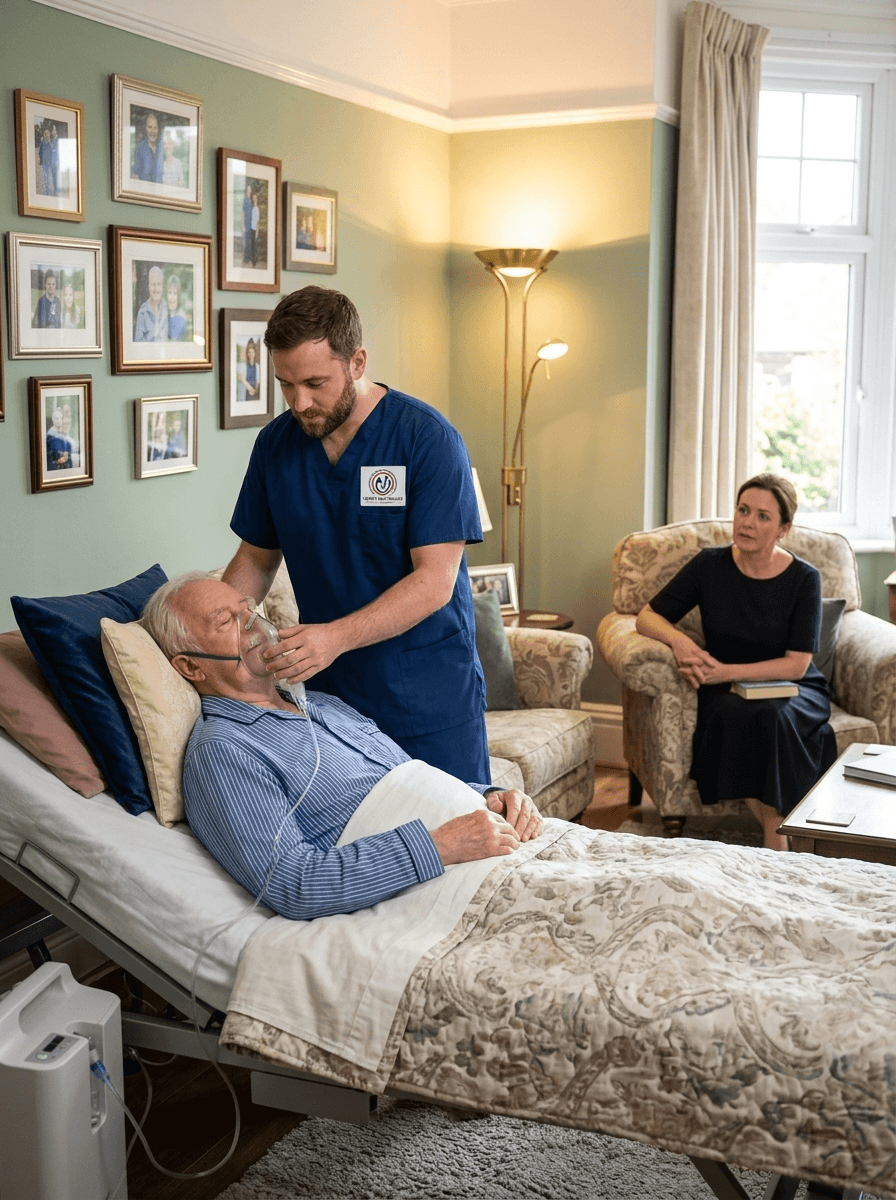
For someone using non-invasive ventilation overnight, care may involve helping them prepare for sleep, supporting the prescribed mask and circuit routine, observing comfort, responding appropriately to alarms and helping with morning routines.
For someone dependent on invasive ventilation through a tracheostomy, support may be considerably more complex and provided continuously.
The care plan may therefore combine ventilation support with airway management, tracheostomy care, suctioning, humidification, cough assistance, positioning, medication, enteral feeding or other individually assessed healthcare needs.
The important point is that care follows the person’s prescribed clinical plan.
Our carers do not independently diagnose respiratory problems or alter prescribed ventilator settings outside agreed professional instructions. When something falls outside their role or competency, they follow the individual’s escalation plan and contact the appropriate healthcare professional or emergency service.
Supporting the whole person
Ventilation & Respiratory Support
Our care teams support the use of prescribed respiratory equipment according to the individual’s care plan, including agreed equipment routines, observations and escalation procedures.
Airway & Tracheostomy Care
Where a person has a tracheostomy, trained staff can support agreed airway and tracheostomy procedures where these have been appropriately planned, delegated and competency-assessed.
Personal Care
We provide dignified assistance with washing, dressing, continence and everyday routines while encouraging people to maintain as much independence as safely possible.
Mobility & Positioning
Care can include moving and handling, positioning, transfers and mobility support according to individual assessments and professional recommendations.
Nutrition & Medication
Where required, the wider care package can incorporate medication support and nutritional needs, including enteral feeding where appropriate arrangements are in place.
Companionship & Independence
Ventilation may be part of your healthcare, but it should not define every part of your day. Our carers support social life, education, work, relationships, hobbies and community participation wherever possible.
Confidence around ventilator equipment
Ventilators are specialist medical devices, and everyone supporting the individual needs to understand their responsibilities.
Our carers work with the equipment prescribed for the person and follow the instructions, training and clinical plan provided for that particular package.
Depending on the individual care plan, their role may include checking that equipment is positioned and connected as expected, observing for visible problems, responding to alarms within their training, maintaining agreed hygiene routines and escalating concerns.
We recognise that one person’s ventilation system may be completely different from another’s.
That is why training is not treated as a generic tick-box exercise. Staff competency should reflect the actual equipment, procedures and needs of the person they are supporting.
Prepared for the unexpected
Reliable ventilator care requires more than knowing what to do when everything is working normally.
Care planning must also consider what happens when it isn’t.
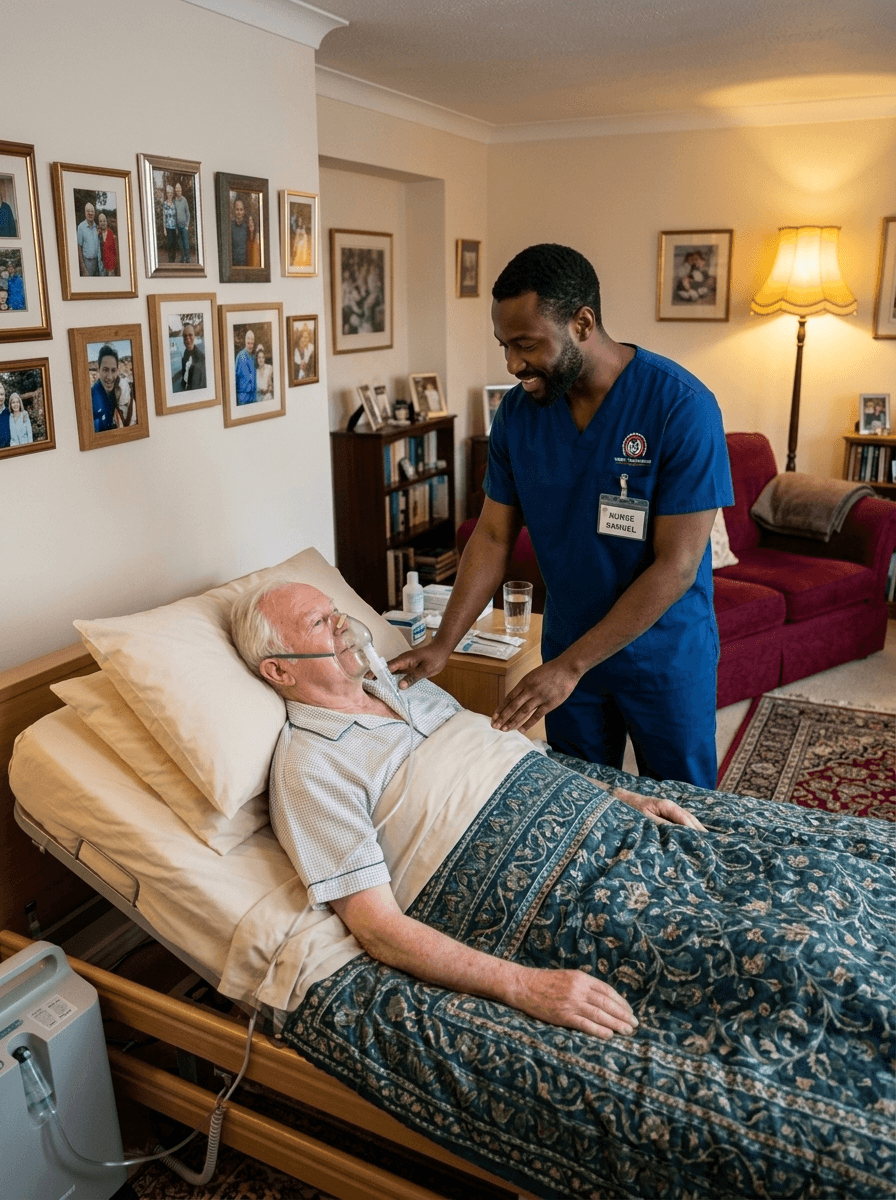
The individual’s clinical and emergency plan may address circumstances such as an unexpected alarm, equipment failure, circuit disconnection, loss of mains electricity, deterioration in breathing, airway problems or other respiratory emergencies.
The appropriate response will depend on the individual’s prescribed arrangements and level of ventilator dependence.
Our staff are trained to recognise when a situation is outside the expected routine and to act promptly, follow the individual’s escalation plan and seek appropriate clinical or emergency assistance.
Where relevant, contingency arrangements are reviewed with the professionals responsible for the individual’s ventilation.
Need a safe discharge home with ventilation?
Speak to our clinical team early so that care planning, training and mobilisation can begin alongside the hospital and respiratory teams.
From hospital to home with ventilation
For someone who has spent weeks or months in hospital, the opportunity to return home can be enormously important.
It can also feel daunting.
Families may wonder whether the right carers will be available, whether staff understand the ventilator, what happens overnight or how emergencies will be managed.
Verity Healthcare can work with the discharge and specialist respiratory teams to help establish a safe package of care before the person comes home.
Our preparation may involve reviewing clinical documentation, understanding prescribed equipment, assessing the home-care requirements, identifying the staffing model, coordinating training and competencies and agreeing communication and escalation pathways.
We aim to make the transition planned rather than rushed, clinically coordinated rather than fragmented, and focused on helping the person return to the life and surroundings that matter to them.
24-hour ventilator care at home
Some people require respiratory support around the clock.
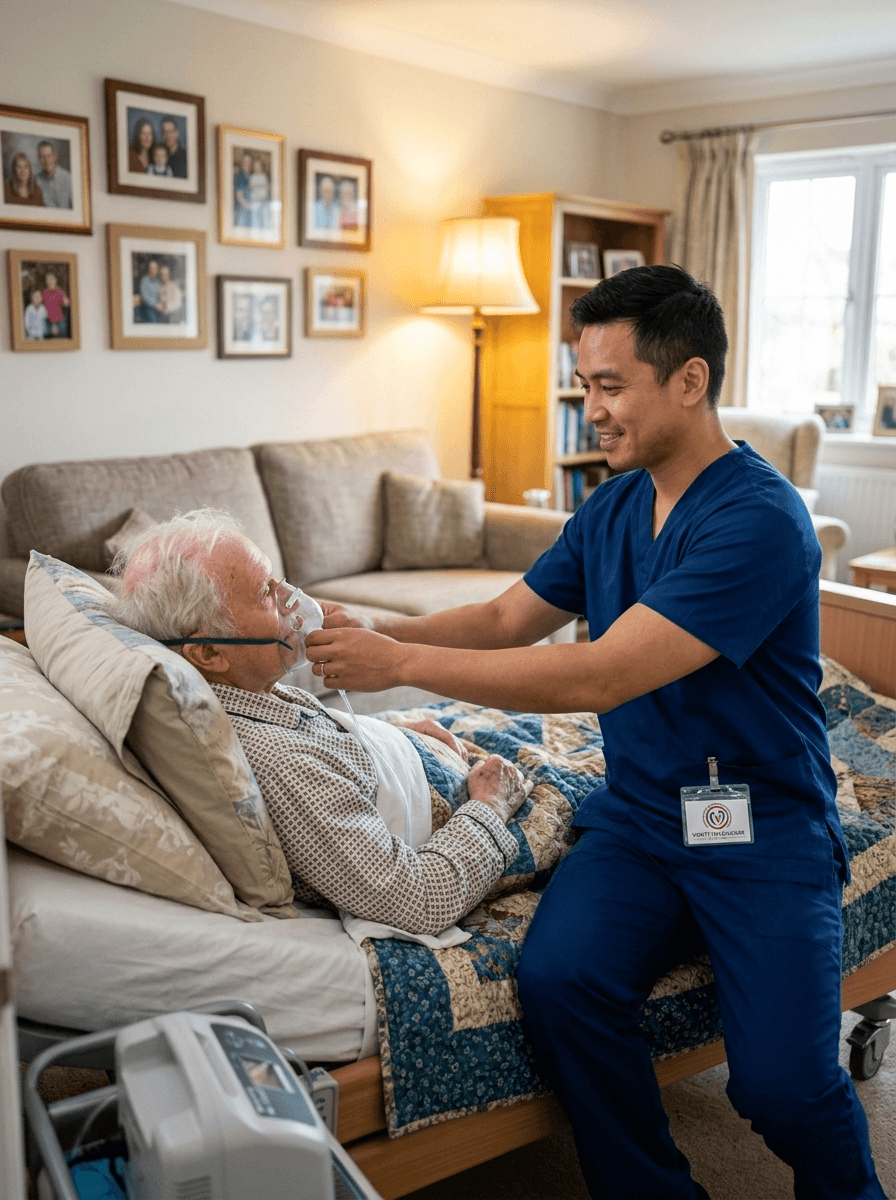
Where continuous care is clinically required, Verity Healthcare can develop a structured 24-hour complex care package, subject to assessment, staffing and commissioning arrangements.
A dedicated team can provide continuity across daytime and overnight shifts, helping ensure the individual has appropriately trained support available throughout the day and night.
For someone who is highly dependent on their ventilation, continuity matters.
Staff need to understand not only the clinical care plan but also the person’s usual presentation—how they communicate, what is normal for them, what makes them comfortable and what subtle changes might indicate that something is wrong.
That familiarity can make complex care at home feel safer and less clinical.
Who may need home ventilation support?
People receive long-term ventilation for many different reasons.
Some live with neuromuscular conditions, where the muscles responsible for breathing become weaker. Others require ventilatory support following spinal cord injury, acquired brain injury or another neurological condition.
Home ventilation can also be prescribed for people with particular respiratory, chest-wall or hypoventilation conditions where breathing is insufficient, particularly during sleep.
Children and young people may require home ventilation because of congenital, neurological, respiratory or other complex health needs.
The diagnosis alone does not tell us what care someone requires.
For that reason, Verity Healthcare assesses the individual person, their prescribed respiratory treatment and the complete package of support they require.
Call us today to arrange live-in care.
Ventilation alongside complex neurological care
Respiratory support is often only one part of a much broader care package.
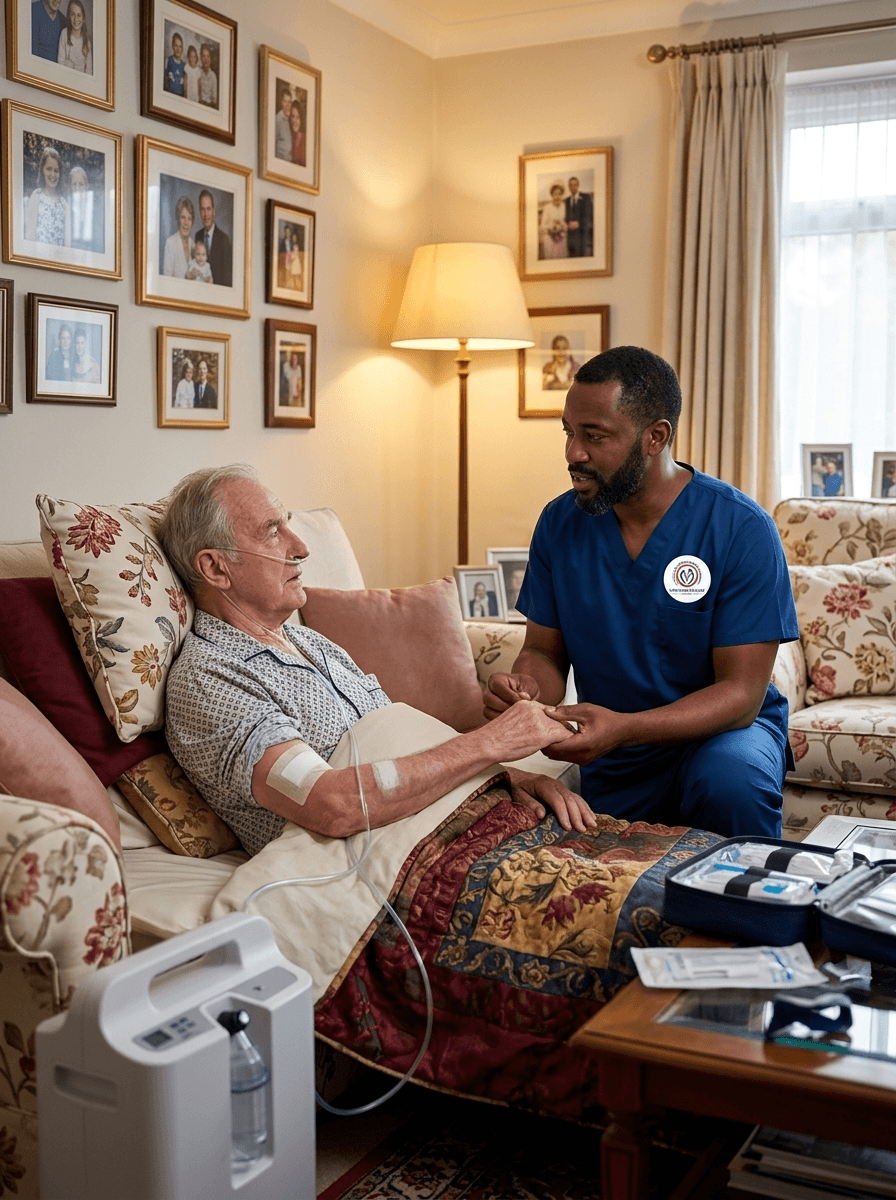
Someone with a high spinal cord injury, for example, may also require extensive assistance with mobility, positioning, continence, skin integrity and personal care.
A person with acquired brain injury may have communication, cognitive or behavioural support needs alongside ventilation.
Someone living with a progressive neurological condition may experience changing respiratory, mobility and communication requirements over time.
Our complex-care approach allows these needs to be considered together rather than treating the ventilator as an isolated piece of equipment.
Ventilation and tracheostomy care
Some people receive invasive ventilation through a tracheostomy.
In these circumstances, safe care requires a clear understanding of both the ventilator and the person’s airway-management plan.
Subject to clinical assessment, delegation and staff competency, support may incorporate routine tracheostomy care and other agreed airway-related procedures alongside ventilation.
The exact requirements are determined by the individual’s healthcare professionals and documented within their clinical care plan.
Verity Healthcare’s nursing team can help coordinate the care workforce around those instructions so that staff understand what they are authorised and competent to do, what they must observe and when they must escalate.
Helping you live beyond ventilation
A ventilator may support your breathing, but it should not become the centre of your identity.
Good home care creates space for ordinary life.
That might mean helping a young person attend school with the appropriate support, enabling an adult to continue working or studying, accompanying someone to family occasions or simply making it possible to enjoy an afternoon outside the house.
We take a strength-based approach to care.
Where someone can safely participate in their own routines, make decisions or manage aspects of their care themselves, we support that independence.
The objective is not to create unnecessary dependence on carers. It is to provide the right amount of skilled support so that the individual can live with maximum choice, control and confidence.

Ventilator care for children and young people
When a child requires ventilation, the entire family can be affected.
Parents may have spent significant periods in hospital learning new clinical routines and may understandably feel anxious about taking their child home.
Where Verity Healthcare is commissioned to provide a paediatric or young-person’s package, our approach begins with the child or young person and their family.
We consider clinical requirements alongside sleep, play, education, communication, family routines and development.
Staff assigned to the package must have the appropriate training and competencies for the responsibilities they undertake.
We also work collaboratively with the professionals involved in the child’s care so that the home-care arrangements support both clinical safety and family life.
Call us today to arrange home care.
Reassurance for families
Caring for someone who relies on ventilation can carry a considerable sense of responsibility.
Even when relatives are confident with equipment and routines, being constantly responsible can be exhausting.
A professionally managed care package can allow family members to return to being a partner, parent, sibling or relative rather than feeling they must always be the primary clinician or carer.
We involve families in care planning in accordance with the person’s wishes and lawful arrangements, recognising that relatives frequently possess invaluable knowledge about the individual’s routines, communication, normal presentation and preferences.
Our goal is to build a partnership in which everyone understands who is responsible for what and how support will be coordinated.
Working with your respiratory and healthcare teams
Ventilator care at home works best when communication between services is clear.
With appropriate consent and information-sharing arrangements, Verity Healthcare can liaise with specialist home ventilation services, respiratory consultants, respiratory nurses, physiotherapists, community nurses, GPs, occupational therapists, speech and language therapists, dietitians, hospital teams, case managers, social workers, ICB teams and commissioners.
The specialist respiratory team remains central to the prescription and management of the person’s ventilation.
Our role is to help ensure that the agreed clinical plan is translated into safe, consistent everyday support in the person’s home.
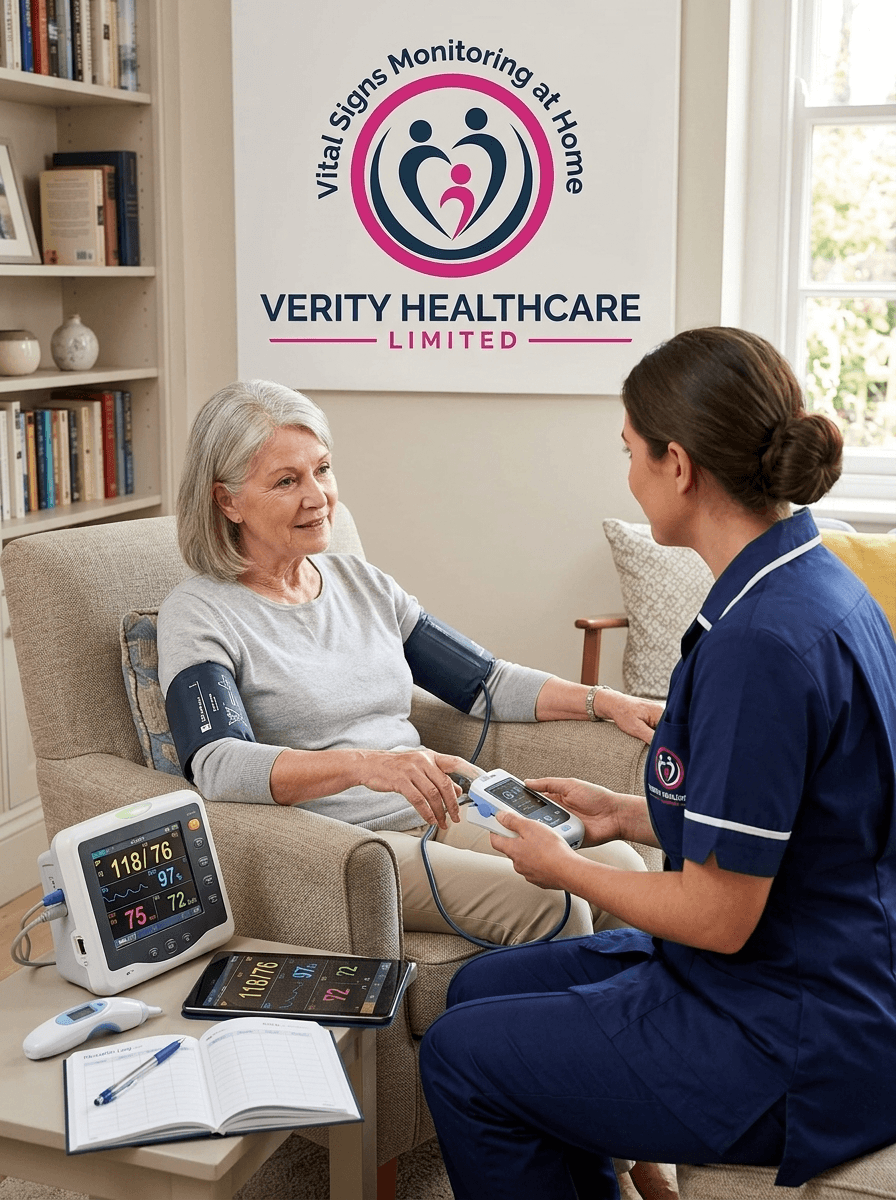
Who are Verity Healthcare?
Verity Healthcare is a CQC-regulated home-care provider supporting children, young people and adults to live safely and independently in their own homes and communities.
Our services range from visiting and live-in care to specialist nursing and complex-care packages for people with significant clinical and neurological needs.
Our Nursing Team provides clinical leadership across complex packages, supporting assessment, care planning, risk management, staff competency and multidisciplinary working.
For people requiring home ventilation, our focus is to combine clinical governance, skilled carers, continuity and person-centred support so that complex healthcare can fit more naturally around everyday life.
Why choose Verity Healthcare for ventilator care?
Nurse-Led Clinical Oversight
Complex ventilator care is supported through our nursing and clinical governance arrangements, helping ensure that risks, competencies and escalation arrangements are clearly understood.
Individual Clinical Assessment
No ventilation package is copied from another. We assess the person, their equipment, professional instructions, clinical needs and everyday goals.
Competency-Assessed Care Teams
Specialist healthcare tasks are undertaken only where the appropriate training, competency assessment and care arrangements are in place.
Continuity of Care
We aim to build a consistent team who become familiar with the individual’s normal routines, communication, preferences and clinical presentation.
Multidisciplinary Working
We work collaboratively with respiratory and wider healthcare professionals so that home care remains aligned with the person’s prescribed clinical plan.
Life Beyond Clinical Care
Our aim is not simply to manage respiratory support. We help people maintain relationships, routines, interests, education, work and community participation wherever possible.

Experienced registered nurses
Verity Healthcare’s registered nurses and clinical professionals support the safe planning and delivery of complex home-care packages.
For ventilated individuals, nursing input can include clinical assessment, risk planning, care-plan development, staff competency, escalation arrangements, review and communication with the wider multidisciplinary team.
This creates a clearer clinical governance structure around the carers providing day-to-day support.
Eirini Stamkopoulou – Lead Nurse
Providing nursing leadership, clinical oversight and support for complex and delegated healthcare across Verity Healthcare services.
How to begin your ventilator care journey
1. Speak to our dedicated team
Call 0330 0436 899 and tell us about the care you are looking for. If you are a family member, case manager, discharge professional or commissioner, we can discuss the proposed package and the information required for clinical review.
2. Clinical assessment and care planning
We review the person’s ventilation and wider support needs, current professional instructions, equipment, risks, routines and desired outcomes.
This allows us to determine the appropriate staffing, training, competency and clinical governance arrangements.
3. Carefully prepared care team
We identify appropriate carers and arrange the training and competency requirements relevant to the individual package before specialist responsibilities are undertaken.
Once care begins, the package is monitored and reviewed as needs evolve.
Ventilator care referrals for healthcare professionals
We welcome enquiries from NHS Continuing Healthcare teams, Integrated Care Boards, hospital discharge teams, case managers, local authorities and other healthcare professionals seeking home-care support for an individual with complex respiratory needs.
Early referral allows time for the clinical information to be reviewed and for staffing, training, competency and mobilisation requirements to be considered properly.
Our nursing team can work with the professionals involved to understand the prescribed ventilation arrangements, associated clinical interventions, risk controls and expected care outcomes.
Need to discuss a complex respiratory package?
Call 0330 0436 899
We're a fully regulated home care provider
Frequently asked questions about ventilator care at home
Yes. Many people receiving long-term ventilation can live in their own homes when appropriate clinical, equipment and care arrangements are in place.
Whether home care is appropriate depends on the person’s individual condition, ventilation requirements, risks, home environment and professional assessment.
Ventilator care at home is specialist support for someone who receives prescribed mechanical assistance with breathing in their own home.
Depending on the individual, this may involve non-invasive ventilation through a mask or invasive ventilation through a tracheostomy.
The wider care package may also incorporate personal care, airway support, mobility, medication, nutrition and other complex healthcare requirements.
Non-invasive ventilation, or NIV, provides breathing support through an interface such as a nasal or full-face mask rather than through a tracheostomy.
Some people use it only during sleep, while others require it for longer periods.
Bi-level positive airway pressure is a commonly used form of non-invasive respiratory support in which different prescribed pressure levels are delivered during breathing.
People sometimes use the brand or generic term BiPAP when referring to this type of support.
Not exactly.
CPAP provides continuous positive airway pressure and is commonly associated with conditions such as obstructive sleep apnoea. Non-invasive ventilation provides assisted ventilatory support using prescribed pressure patterns.
The individual’s respiratory specialist determines which therapy and equipment are appropriate.
Invasive ventilation provides respiratory support through an artificial airway, usually a tracheostomy tube.
People receiving long-term tracheostomy ventilation generally require carefully planned specialist support because airway care and ventilation must be considered together.
Yes, where the activity is appropriate for delegation or support and the carer has received the necessary training, competency assessment and instructions for that individual.
The exact responsibilities depend on the person’s clinical plan and the professionals responsible for their respiratory care.
Ventilator parameters are prescribed and managed by the appropriate respiratory or home-ventilation professionals.
Verity Healthcare staff follow the individual’s authorised clinical plan and do not independently make changes outside their training, role or professional instructions.
The appropriate response depends on the ventilator, alarm and individual circumstances.
The person’s care plan should set out the agreed actions and escalation arrangements. Trained carers follow the procedures for which they have been competency-assessed and escalate concerns promptly when required.
Contingency arrangements for electricity loss should form part of the person’s individual ventilation and emergency plan.
The exact arrangements depend on factors such as the individual’s level of ventilator dependence, prescribed equipment and available battery or back-up systems.
Yes, subject to clinical assessment and the appropriate staffing, training, delegation and competency arrangements.
We can consider packages where ventilation forms part of wider complex tracheostomy and airway care.
Where clinically required and agreed as part of the care package, support can include waking-night or other overnight arrangements.
The appropriate staffing model is based on individual assessment.
We can assess referrals for individuals requiring continuous or 24-hour complex support.
The final care arrangement depends on clinical requirements, risk assessment, staffing, commissioning and the competencies required.
Verity Healthcare supports children and young people with complex healthcare needs where the service is appropriate and the necessary clinical, safeguarding, staffing and competency arrangements can be established.
Yes.
We encourage early conversations with the hospital, respiratory team, family and commissioners because complex ventilation packages often require detailed preparation before discharge.
People requiring home ventilation may have neurological, neuromuscular, spinal, respiratory or other conditions that affect effective breathing.
The need for ventilation is determined by specialist healthcare professionals rather than by the diagnosis alone.
Some people with significant ongoing healthcare needs receive care funded through NHS Continuing Healthcare or other NHS commissioning arrangements, depending on individual eligibility and assessment.
Verity Healthcare can work with the responsible commissioning team where a package has been approved or is being developed.
The cost of a ventilator care package depends on the individual’s needs, number of care hours, staffing model, clinical complexity and whether waking-night or continuous support is required.
Following assessment, the required care package can be discussed with the individual, family, commissioner or case manager.
Related specialist care services
Tracheostomy Care
Specialist airway and tracheostomy support delivered at home according to individual clinical plans and competency arrangements.
Complex Care
Nurse-led home care for people living with advanced, long-term or highly complex healthcare needs.
Nursing Care
Clinical leadership and nursing support helping people receive personalised healthcare in their own homes.
Clinical Intervention
Specialist clinical support delivered through individually assessed care arrangements.
Acquired Brain Injury Care
Rehabilitation-focused home support for people living with the effects of acquired or traumatic brain injury.
Spinal Cord Injury Care
Specialist support promoting independence following spinal cord injury, including complex healthcare where required.
PEG Feeding Care
Personalised support for people receiving nutrition and medication through enteral feeding systems.
Live-in Care
One-to-one support within your own home, helping maintain familiar routines, relationships and independence.
Breathe easier. Live your life at home.
Living with ventilation may require specialist healthcare, but home should still feel like home.
At Verity Healthcare, we combine nursing oversight, carefully trained carers and truly person-centred support to help people with complex respiratory needs live safely, confidently and as independently as possible.
Whether you are preparing to leave hospital, looking for a new complex-care provider or arranging long-term ventilator support for someone you love, talk to our clinical team.
Call 0330 0436 899
We’re a fully regulated home care provider
Verity Healthcare Limited provides regulated home, nursing and complex-care services designed around individual needs, safety, choice and quality of life.
Contact us today
Accreditation