Spinal Cord Injury Care at Home
A spinal cord injury can change how you move, feel and manage everyday activities, but it should not define the life you are able to lead. With the right support, many people can continue living at home, maintain important relationships, pursue rehabilitation goals and stay connected to work, education, family and community life.
At Verity Healthcare, we provide personalised spinal cord injury care at home for adults, children and young people whose needs may range from practical daily assistance to highly complex, 24-hour support.
Our approach combines compassionate care, nursing oversight where required, careful risk management and a strong focus on ability, independence and personal goals.

Talk to us about spinal cord injury care at home
Care completely tailored to you
No two spinal cord injuries affect people in exactly the same way. The impact depends on where the spinal cord is injured, whether the injury is complete or incomplete, other health conditions and the person’s own circumstances. You or your loved one may require support with transfers, personal care throughout the day and night with ventilation, cough support, bowel and bladder management, pressure care, positioning and other complex health needs. while remaining independent in many other areas.
Verity Healthcare therefore does not use a one-size-fits-all model. We assess the person as a whole and develop care around the way they want to live. Our role is to provide the right level of support while protecting dignity, choice and control.
Understanding spinal cord injury
The spinal cord carries messages between the brain and the rest of the body. When it is damaged by trauma or disease, movement, sensation and automatic body functions below the level of injury may be affected. A spinal cord injury may be described as complete, where there is no sensory or motor function preserved in the lowest sacral segments, or incomplete, where some function remains. The terms paraplegia and tetraplegia are also used to describe patterns of impairment.
Mobility and movement
Support may include transfers, repositioning, wheelchair use, hoisting, exercise programmes and safe access to the home and community in line with assessed moving and handling plans.
Skin and pressure care
Reduced sensation or mobility can increase pressure-injury risk. Care may include agreed repositioning, skin observation, pressure-relieving equipment and prompt escalation of concerns.
Bladder and bowel routines
Some people experience neurogenic bladder or bowel dysfunction. Support must follow the individual’s specialist plan, prescribed routines and competency requirements.
Respiratory health
Higher-level injuries can affect breathing and cough strength. Some people may require cough-assist support, suction, tracheostomy care or ventilation as part of a wider package.
Pain, spasms and fatigue
Neuropathic pain, musculoskeletal pain, spasticity and fatigue can affect comfort, sleep, activity and rehabilitation. Care can be organised around the person’s management plan and daily priorities.
Emotional wellbeing
Adjustment after spinal cord injury can affect confidence, relationships and emotional wellbeing. Consistent carers can provide reassurance while supporting the person to retain control over daily life.
More than care. Support for life after spinal cord injury.
The right support can help someone organise the morning in the way they prefer, make decisions about their care, use adapted equipment, attend rehabilitation, maintain family roles, return to education or employment, travel, socialise and participate in activities that give life meaning.
At Verity Healthcare, we work from the principle of doing with, not simply doing for. If someone can safely complete part of an activity independently, we encourage that participation. Where rehabilitation professionals have agreed strategies to improve strength, function, transfers, wheelchair skills or daily living, our care workers can support those strategies consistently within their assessed role.
For some people, progress may mean learning a new way to transfer. For another, it may mean directing their own personal care, independently managing technology, getting back to work or going out with friends. Independence is personal, and care should reflect that.

Supporting spinal cord injury rehabilitation at home
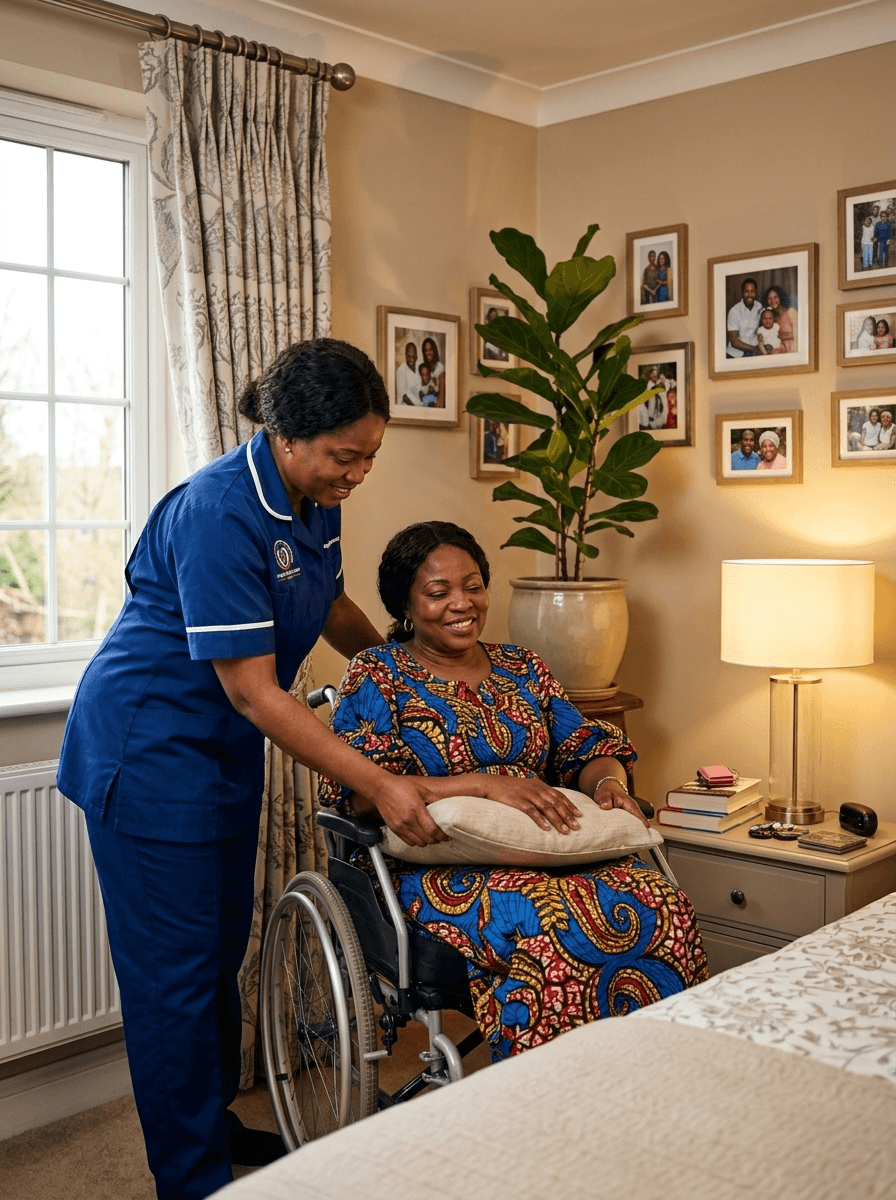
Rehabilitation often continues long after someone leaves a specialist spinal cord injury centre or hospital. Home is where many important skills need to work in real life: getting in and out of bed, using the bathroom, preparing food, managing equipment, travelling outside, completing work or study tasks and building confidence in familiar surroundings.
Verity Healthcare can work alongside the wider multidisciplinary team and help reinforce agreed strategies during everyday care. This may include input from spinal cord injury specialists, physiotherapists, occupational therapists, specialist nurses, rehabilitation consultants, psychologists, urologists, respiratory clinicians, dietitians, wheelchair services and case managers.
Our care team does not replace specialist rehabilitation professionals. Instead, we help translate agreed clinical and rehabilitation plans into consistent daily support, with the person’s consent and involvement.
Planning a return home after spinal cord injury?
We can discuss discharge planning, care-team preparation and complex-care requirements.
Spinal cord injury care that adapts around you
Visiting Spinal Cord Injury Care
Scheduled visits can support personal care, medication, meals, continence routines, transfers, rehabilitation activities, appointments and community access while preserving a high level of independence.
Live-in Spinal Cord Injury Care
A carefully matched care professional lives in the home and provides continuity throughout the day. This can be suitable when substantial support is needed but the person wants to remain in familiar surroundings.
Complex & 24-Hour Care
Where needs are extensive or clinically complex, we can consider a structured 24-hour package using trained care workers, waking-night support and nursing oversight according to assessment and commissioning arrangements.
Nurse-Led Clinical Support
Registered nurses and clinical professionals can support assessment, risk planning, delegated healthcare tasks, staff competency and clinical review when the person’s needs require this level of oversight.
Expert spinal cord injury care with clinical oversight
Some people living with spinal cord injury have complex healthcare needs that require much more than standard home care. Verity Healthcare’s nursing and clinical governance arrangements can support the assessment, planning and oversight of these packages so that care workers understand both the person and the clinical responsibilities involved.
Depending on assessed needs and professional instructions, a package may include support associated with catheter care, bowel routines, skin integrity, pressure management, respiratory care, enteral feeding, tracheostomy, ventilation, suction, cough-assist equipment, medication, seizure management or other delegated healthcare interventions. Specialist procedures are undertaken only where the appropriate care plan, training, competency assessment, equipment and professional oversight are in place.
How our spinal cord injury carers can support you
Personal care with dignity
Discreet support with washing, showering, dressing, grooming, oral care and continence, while ensuring the individual remains involved in decisions and directs their care wherever possible.
Moving, transfers and positioning
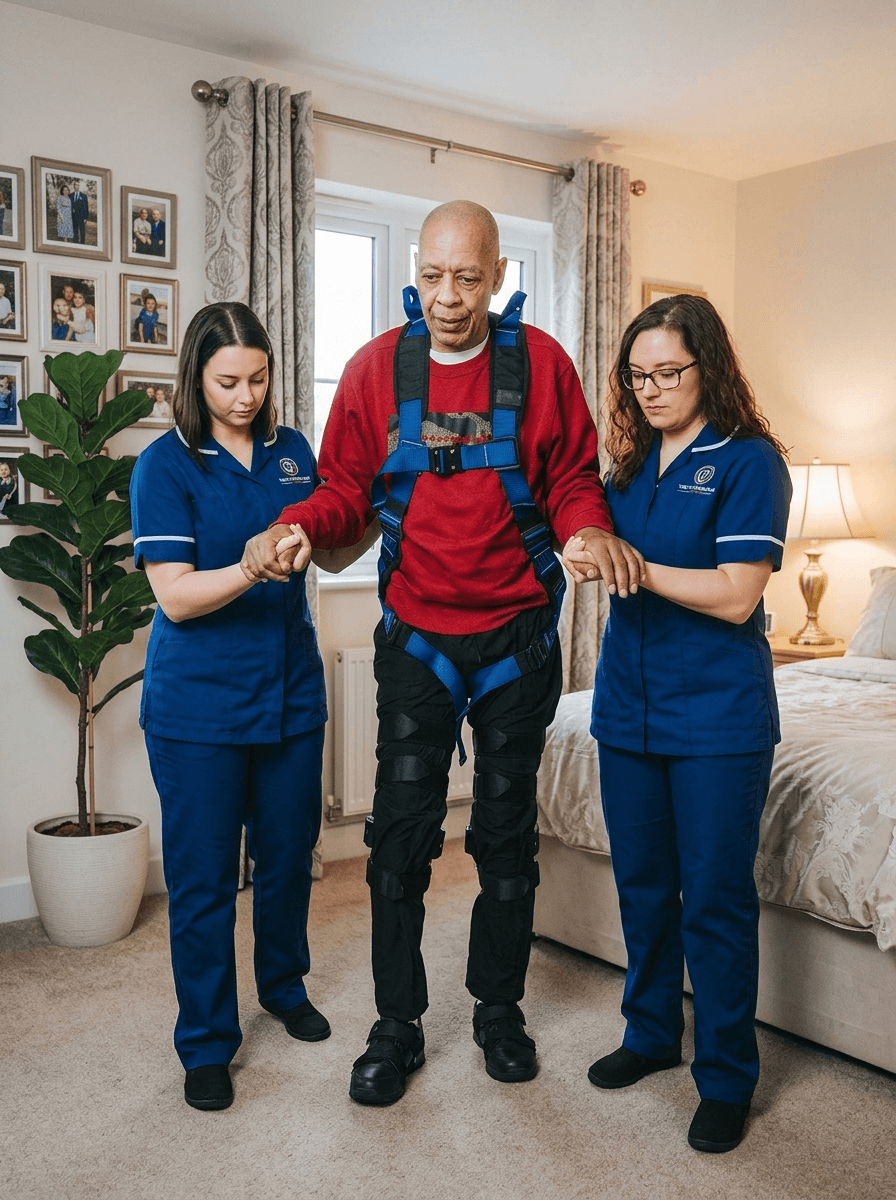
Support with hoists, slide sheets, transfer boards, standing aids, wheelchairs and repositioning in accordance with the individual moving-and-handling assessment and equipment plan.
Medication support
From reminders and prompting to more comprehensive assistance, medication support is delivered according to the person’s assessed needs, prescriptions and medication care plan.
Meals, hydration and nutrition
Support with shopping, food preparation, eating and drinking, hydration plans and specialist nutritional arrangements, including enteral feeding where assessed and appropriately delegated.
Domestic and everyday routines
Help with laundry, light household tasks, organising appointments, maintaining equipment and keeping routines manageable, without unnecessarily taking over tasks the person can perform.
Community, work and social life
Support can extend beyond the home to appointments, hobbies, family events, education, employment, shopping, accessible leisure activities and other goals that matter to the individual.
Protecting skin
Reduced mobility and altered sensation can make skin protection an important part of spinal cord injury care. The person may not feel pressure, heat or discomfort in the usual way, so prevention depends on individual routines, correct equipment and careful observation.
Where included in the care plan, carers can support repositioning schedules, use of prescribed pressure-relieving mattresses or cushions, daily skin observation, safe wheelchair positioning, moisture management, nutrition and hydration, and prompt reporting of redness, swelling, heat, skin breakdown or other changes. We follow the person’s specialist advice and do not substitute generic routines for an individual pressure-care plan.
Bladder and bowel care
Spinal cord injury can affect bladder and bowel function, and many people develop a routine that is highly individual and essential to health, dignity, comfort and independence. Safe support requires privacy, consistency, careful documentation and respect for the person’s preferred timing and method.
Depending on the assessed package, trained and competent staff may support catheter-related routines, fluid monitoring, bowel programmes, continence products, stoma care or other agreed interventions within the boundaries of their role. Any clinical procedure must be supported by clear instructions, training, competency assessment and escalation arrangements.
A missed or disrupted bowel or bladder routine can have significant consequences for some people with spinal cord injury. For that reason, continuity, punctuality and adherence to the agreed plan are central to our approach.

Recognising autonomic dysreflexia
Autonomic dysreflexia is a potentially life-threatening complication that can affect some people with spinal cord injury, particularly injuries at or above T6. It can involve a sudden, dangerous rise in blood pressure in response to a problem below the level of injury, often involving the bladder, bowel or skin.
Where a person is identified as being at risk, their care plan should include individual warning signs, likely triggers and emergency actions. Verity Healthcare staff supporting that person are expected to understand the plan, recognise changes from the person’s normal presentation and escalate urgently. Suspected autonomic dysreflexia is treated as a medical emergency and emergency services should be contacted in accordance with the individual plan and clinical guidance.
Respiratory support
A cervical or high thoracic spinal cord injury can affect the muscles used for breathing and coughing. Some people need no direct respiratory intervention, while others may require structured support with airway clearance, assisted cough, cough-assist equipment, oxygen where prescribed, non-invasive ventilation, tracheostomy care or invasive ventilation.
Where respiratory needs are part of the package, Verity Healthcare brings them into one coordinated care plan rather than treating each task separately. Appropriate clinical professionals help establish the person-specific plan, equipment checks, emergency arrangements and competency requirements before staff undertake specialist respiratory support.
Safe mobility and moving & handling
Mobility support after spinal cord injury must be both safe and enabling. The aim is not simply to move someone from one place to another, but to support independence, comfort, skin protection and participation in daily life.
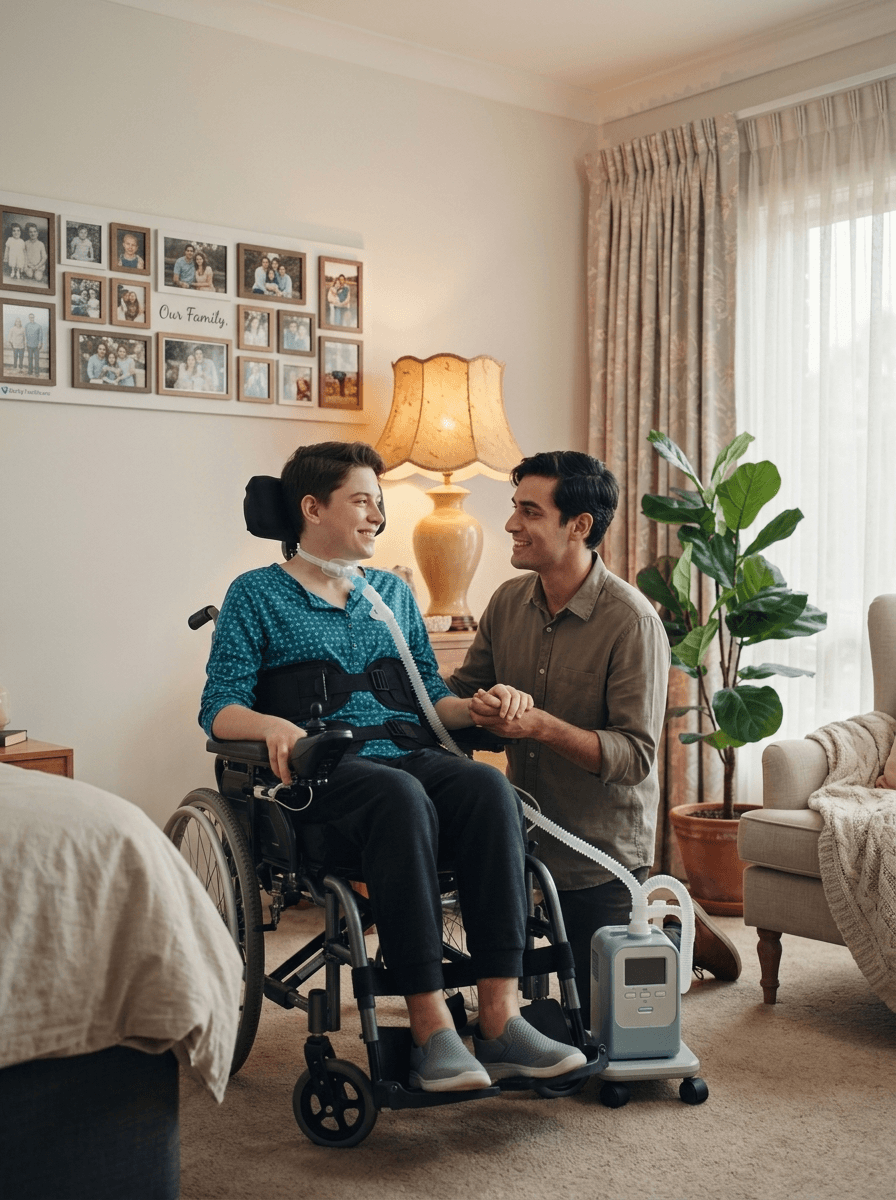
Care workers follow the person’s assessed moving-and-handling plan and use the equipment specified for them. This may include a ceiling-track or mobile hoist, appropriate slings, transfer boards, slide sheets, standing aids, specialist beds, shower chairs and individually prescribed wheelchairs or seating systems. Equipment should be used only as intended and concerns about fit, function or safety must be reported promptly.
Where the person can direct their own transfers or has developed established techniques with therapists, we respect that expertise and work with them rather than imposing unnecessary assistance.
Assistive technology
Technology can make a substantial difference to independence after spinal cord injury. Depending on the individual, this may include powered wheelchairs, environmental control systems, voice or switch-controlled devices, smart-home technology, accessible phones and computers, personal alarms, door-entry systems, pressure monitoring or other adaptive equipment.
Verity Healthcare can incorporate agreed technology into the care plan, helping the person use equipment consistently while ensuring human support remains available where it is needed. The purpose is always practical: giving the person greater choice, control and access to everyday life.
After hospital care
Returning home after a spinal cord injury can be exciting and daunting at the same time. The home environment, equipment, care team and daily routines may all need to be ready before discharge. Early planning helps reduce avoidable gaps and gives the individual and family greater confidence.
With appropriate consent, Verity Healthcare can liaise with the spinal cord injury centre, ward and discharge team, therapists, community nurses, social workers, continuing healthcare teams, commissioners, case managers and family members. We can review the proposed care package, equipment, moving-and-handling arrangements, medication, bowel and bladder plan, skin care, respiratory needs, emergency protocols, rehabilitation goals and staffing requirements.
Where specialist skills are required, staff preparation and competency assessment should be completed before they take responsibility for those interventions. The care plan can then be reviewed after discharge and adapted as the person settles back into home life.
Need support with a spinal injury discharge package?
Working together around your goals
Spinal cord injury support is often most effective when everyone works from the same goals. With the person’s permission, we communicate with the wider multidisciplinary team so that day-to-day care complements specialist rehabilitation and health management rather than operating separately from it.
A physiotherapist may focus on strength, transfers, posture or respiratory exercises. An occupational therapist may help develop techniques for personal care, kitchen tasks, technology or environmental access. Specialist nurses may advise on skin, bowel or bladder management. Wheelchair teams may prescribe seating and mobility equipment. Our carers help carry those agreed approaches into ordinary routines, while recording observations and escalating concerns through the appropriate channels.
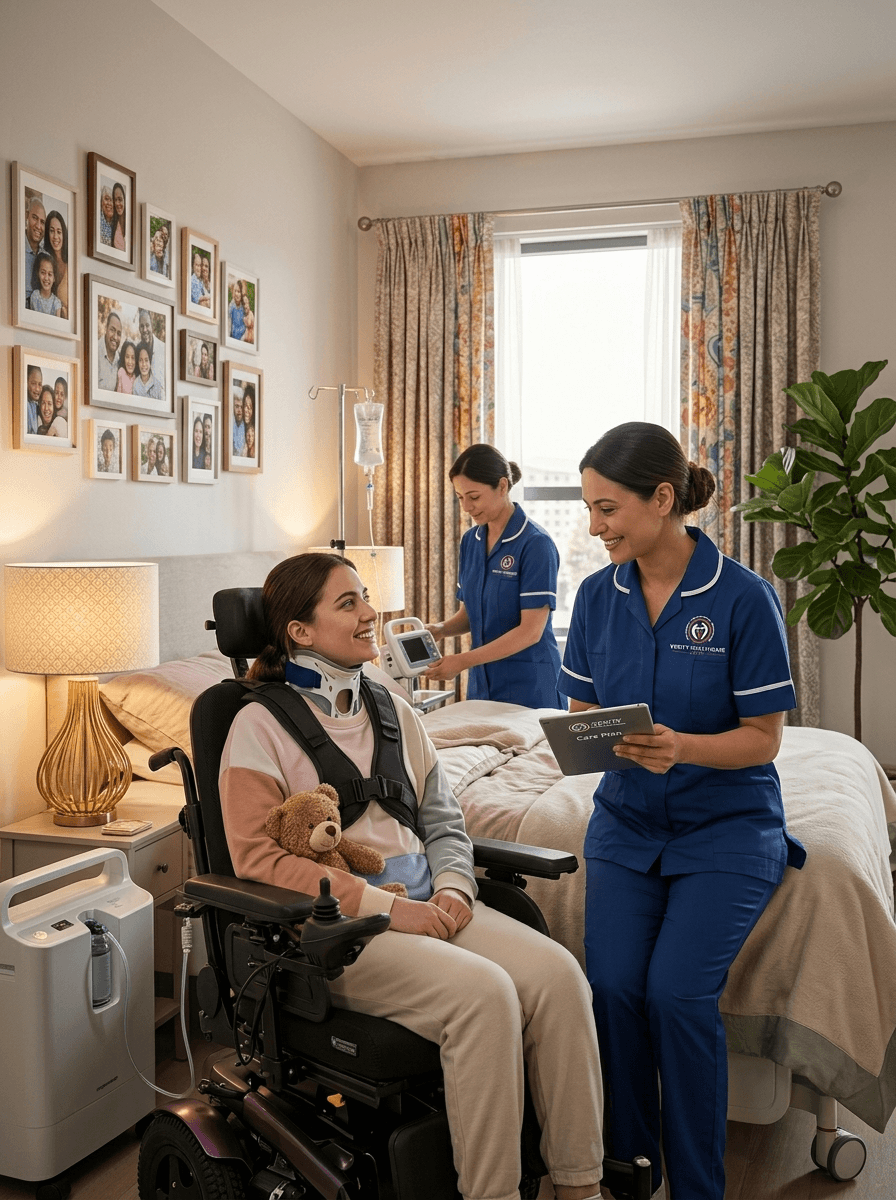
Support that respects identity
Living with spinal cord injury involves much more than physical care. People remain partners, parents, friends, colleagues, students and members of their communities. Privacy, relationships, sexuality, body image, cultural preferences and personal identity should be treated with the same respect as any other part of care.
Our care teams are expected to provide discreet, non-judgemental support, knock and seek consent before entering personal spaces, preserve privacy during intimate care and recognise when the individual wants assistance and when they want space. Care should help a person live their life, not make the home feel like a clinical environment.
Why our spinal cord injury care services?
Nurse-led expertise
Our nursing and clinical teams can provide oversight for complex packages, including assessment support, care planning, risk management, staff competency and clinical escalation.
Truly personalised care
We build care around the person’s routines, injury, abilities, health risks, equipment, preferences and life goals rather than expecting them to fit a standard service model.
Rehabilitation-focused support
Care workers can reinforce professionally agreed rehabilitation strategies during daily routines, helping turn therapy goals into practical everyday participation.
Continuity and careful matching
We aim to build a consistent team whose skills, communication style and personal qualities suit the individual and the complexity of the package.
Flexible support as needs change
Care can be reviewed and adapted as rehabilitation progresses, health needs change, new equipment is introduced or the individual becomes more independent.
Regulated home care
As a CQC-regulated provider, our services operate within established quality, safeguarding, governance and care-delivery requirements.
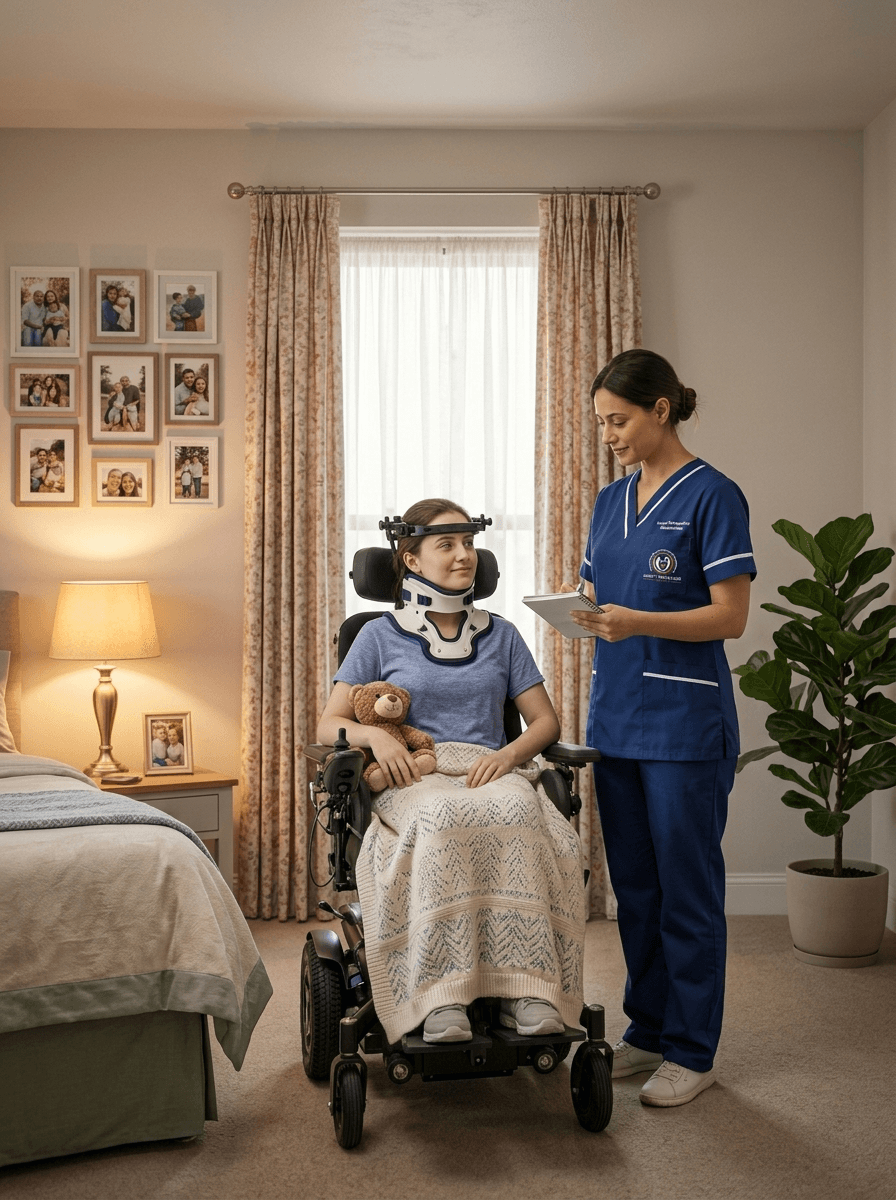
Specialist carers
Good spinal cord injury care requires observation, reliability, technical competence and respect for the person’s own expertise in their condition. Staff must understand that a routine which looks small to someone else may be essential to the individual’s health and independence.
Care workers are recruited for values as well as skills and receive training, supervision and competency assessment appropriate to the people they support. Where a package includes specialist clinical tasks, staff receive additional preparation and are not expected to undertake those responsibilities until the necessary competency arrangements are complete.
Continuity matters. Familiar staff learn how the person prefers to be supported, how equipment is used in that home, what their normal skin, breathing, bowel and bladder patterns are, how they communicate and what subtle changes may need attention.
Experienced registered nurses
Verity Healthcare’s nursing and clinical professionals support the safe delivery of complex care at home. For people living with spinal cord injury and additional healthcare needs, nurses can contribute to assessment, care planning, risk management, delegated-task governance, staff competency, escalation arrangements and ongoing review within the scope of the service.
This helps create a care package that is clinically structured while still feeling personal and home-based. The individual remains at the centre of decisions, and specialist clinicians remain involved where their expertise is required.
How to begin your spinal cord injury care journey
1. Speak to our dedicated team
Call 0330 0436 899 and tell us about the support you or your loved one requires. We will discuss the situation, urgency, funding or commissioning arrangements where relevant, and the most appropriate next steps.
2. Personalised assessment
We take time to understand the spinal cord injury, current abilities, clinical needs, equipment, routines, risks, preferences and goals. Where appropriate, we can involve family members and relevant professionals with consent.
3. Care planning and team preparation
We develop the care plan, identify appropriately skilled staff, complete package-specific training and competency arrangements where required, and agree how the service will be monitored and reviewed.
Call us today to arrange spinal cord injury care
From visiting care to live-in and complex 24-hour support.
Frequently asked questions
Spinal cord injury care is personalised support for someone whose spinal cord has been damaged by trauma or disease. Depending on the individual, support may include personal care, mobility and transfers, skin protection, bladder and bowel routines, medication, rehabilitation activities, respiratory support, community access and complex healthcare.
Yes. Many people with spinal cord injury live at home with support matched to their needs. The appropriate model may range from scheduled visits to live-in care or a structured 24-hour package. A detailed assessment is needed where needs are complex.
Yes, subject to assessment. We support people with different levels and completeness of spinal cord injury, including people described as having paraplegia or tetraplegia. The care package is based on the individual’s actual needs rather than the label alone.
Where assessment identifies a need for continuous support, Verity Healthcare can consider a 24-hour package with appropriately trained staff. The staffing model will depend on clinical needs, moving and handling, night-time requirements, risks and commissioning arrangements.
Support may be possible depending on the exact intervention, the person’s care plan and the competency requirements involved. Specialist or delegated procedures are only undertaken where training, competency, professional guidance and governance arrangements are in place.
Yes, where this is part of the individual’s assessed care needs. The person’s care plan should identify their risk, signs, common triggers and emergency actions. Staff are prepared to recognise concerns and escalate urgently in line with that plan.
Potentially, yes. Verity Healthcare provides specialist ventilator and tracheostomy care at home. These services require individual clinical assessment, staff training, competency assessment, equipment arrangements and clear emergency protocols.
Yes. Live-in care may suit someone who requires substantial support throughout the day but wants to remain in their own home. The service is tailored around the person’s routines, independence, sleep arrangements and assessed needs.
Home care can complement a rehabilitation programme developed by qualified professionals. Care workers can help the individual practise agreed strategies in everyday settings and support participation in meaningful daily activities.
Yes. With the person’s consent, we can work with case managers, spinal injury centres, hospital teams, therapists, specialist nurses, commissioners and other professionals so that day-to-day care reflects the wider plan.
Yes. Early contact is helpful because it allows time to assess the proposed package, understand equipment and routines, prepare staff and coordinate with the discharge team before the person returns home.
Cost depends on the level of support, hours, staffing model, night-time arrangements and clinical complexity. Following assessment, Verity Healthcare can explain the proposed care model and associated costs or work with the relevant commissioner or funding team.
You may also be interested in
Complex Care
Specialist, personalised home care for people living with advanced or multiple healthcare needs.
Nursing Care
Nurse-led clinical support and care planning delivered around the individual’s needs at home.
Ventilator Care
Specialist respiratory support for people receiving invasive or non-invasive ventilation at home.
Tracheostomy Care
Specialist airway and tracheostomy support delivered according to individual clinical plans.
PEG Feeding Care
Personalised support for people receiving nutrition, hydration or medication through enteral feeding systems.
Acquired Brain Injury Care
As a CQC-regulated provider, our services operate within established quality, safeguarding, governance and care-delivery requirements.
Physical Disability Support
Flexible care focused on independence, participation, mobility and everyday life.
Live-in Care
One-to-one support within the person’s home, helping preserve routines, relationships and independence.
Talk to Verity Healthcare
Live your life beyond spinal cord injury
A spinal cord injury can change how everyday life is managed, but the right care can help you retain control over how you live it. At Verity Healthcare, we combine compassionate support, specialist preparation, clinical oversight and a strong focus on independence so that care fits around the person rather than the person fitting around care.
Whether you are preparing to leave hospital, reviewing an existing care package or looking for long-term specialist support for yourself or someone you love, talk to our team about creating spinal cord injury care around your life.

Contact us today
Accreditation