PEG Feeding Care at Home
Specialist enteral feeding to support everyday life
0330 0436 899
NURSE-LED
Clinical oversight
PERSONALISED
Care built around you
COMPETENCY-BASED
Trained care teams
COORDINATED
Working with dietitians and clinicians
PEG feeding care should fit around your life
Living with a PEG or gastrostomy tube can make nutrition, hydration and medication safer and more manageable when eating or drinking normally is difficult or unsafe.
At Verity Healthcare, we provide specialist, nurse-led PEG feeding care at home for children, young people and adults who require enteral nutrition as part of their ongoing healthcare.
Our trained care teams can support prescribed feeding routines, hydration, tube and stoma care, medication and wider complex-care needs while helping you remain comfortable and independent in the place you know best.
Whether you require a few scheduled visits each day or a more comprehensive package of complex care, our support is built around you.
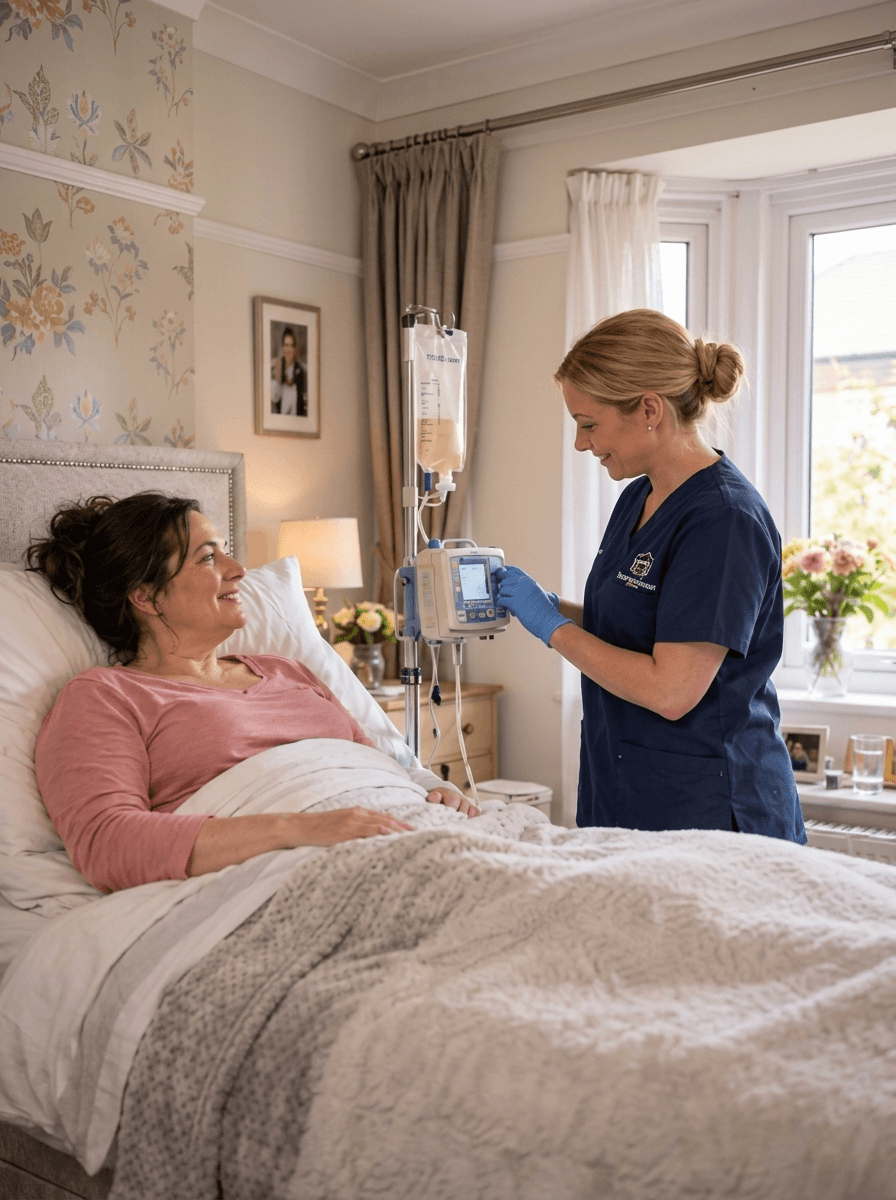
Talk to us about specialist brain injury care at home
Talk to Verity Healthcare about a new care package, hospital discharge or changing enteral feeding needs.
What is PEG feeding?
PEG stands for Percutaneous Endoscopic Gastrostomy.
A PEG is a feeding tube placed through the abdominal wall directly into the stomach. It can provide a route for prescribed nutrition, fluids and certain medicines when eating or drinking by mouth does not provide enough nutrition or cannot be carried out safely.
PEG feeding is one form of enteral nutrition, meaning that nutrition is delivered directly into the digestive system.
Some people receive all of their nutrition through the tube. Others may continue eating or drinking certain foods by mouth where this has been assessed as safe.
The decision about what nutrition is given, how much is required and how it should be administered is made by the individual’s dietitian and healthcare team.
Our role at Verity Healthcare is to make that prescribed plan work safely and consistently in everyday life at home.
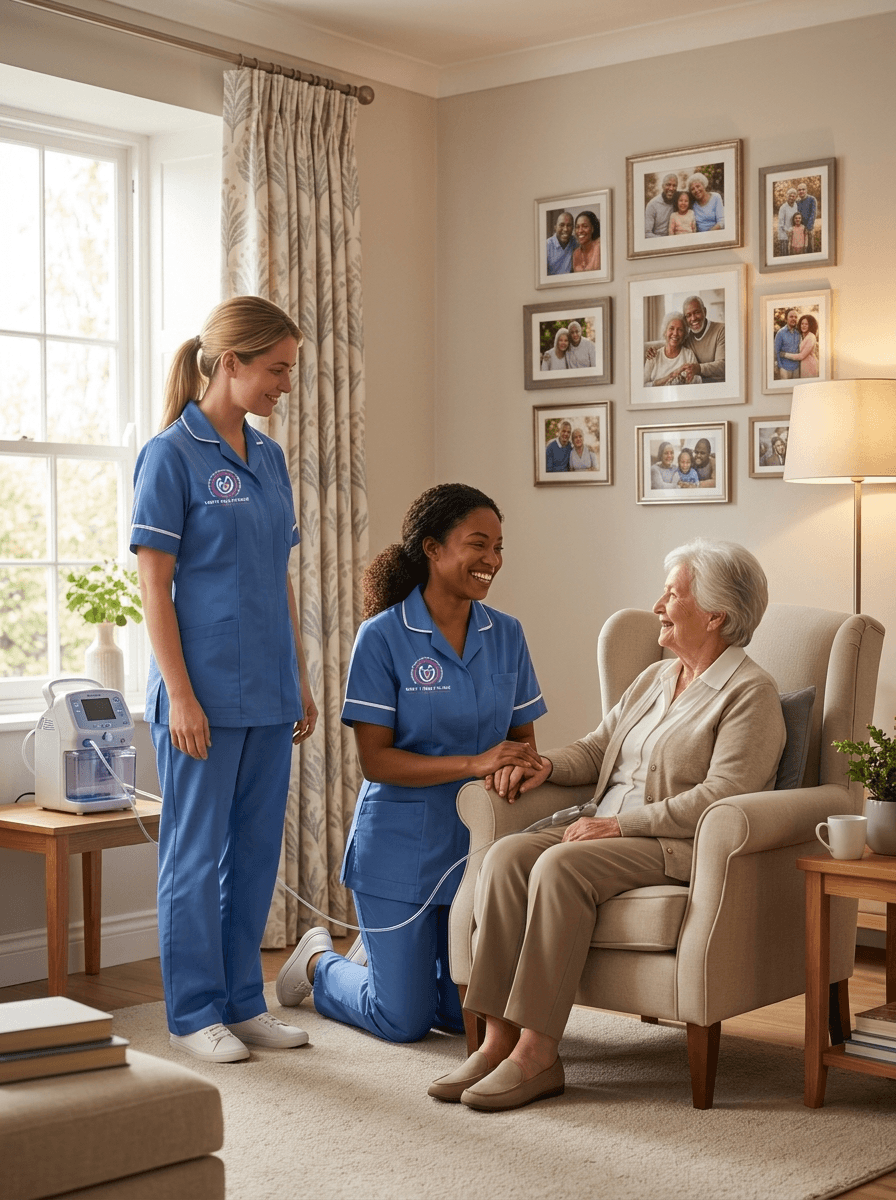
PEG and gastrostomy care
PEG Feeding
A PEG tube enters the stomach through the abdominal wall and provides a long-term route for prescribed nutrition, hydration and authorised medication.
Our carers can support the person’s prescribed feeding regimen after appropriate assessment, training and competency confirmation.
Other Gastrostomy Tubes
Not everyone receiving gastrostomy feeding has exactly the same type of tube.
Some people may have a balloon-retained gastrostomy, low-profile button device or another enteral feeding system.
The specific tube, equipment and care instructions are therefore reviewed before support begins.
Safe nutrition. Personalised care. Everyday independence.
PEG feeding may be clinically important, but the person receiving it remains at the centre of everything we do.
Good PEG care is not simply about connecting a feed.
It is about providing nutrition safely while protecting comfort, dignity, choice, relationships and the person’s ability to live the life that matters to them.
Nurse-led PEG feeding care at home
Enteral feeding is a specialist healthcare activity that requires clear instructions, appropriate training and good clinical governance.
At Verity Healthcare, our nursing and clinical team helps ensure that PEG feeding packages are properly assessed, planned, implemented and reviewed.
Before care starts, we review the person’s current feeding plan and the instructions provided by their dietitian, nutrition team or other responsible healthcare professionals.
We consider the type of feeding tube, prescribed feed, feeding method, hydration, medication, stoma care, positioning, infection prevention, equipment and identified risks.
Our nursing team can then help develop clear care instructions and ensure that carers allocated to the package have the appropriate training and assessed competency before undertaking delegated clinical responsibilities.
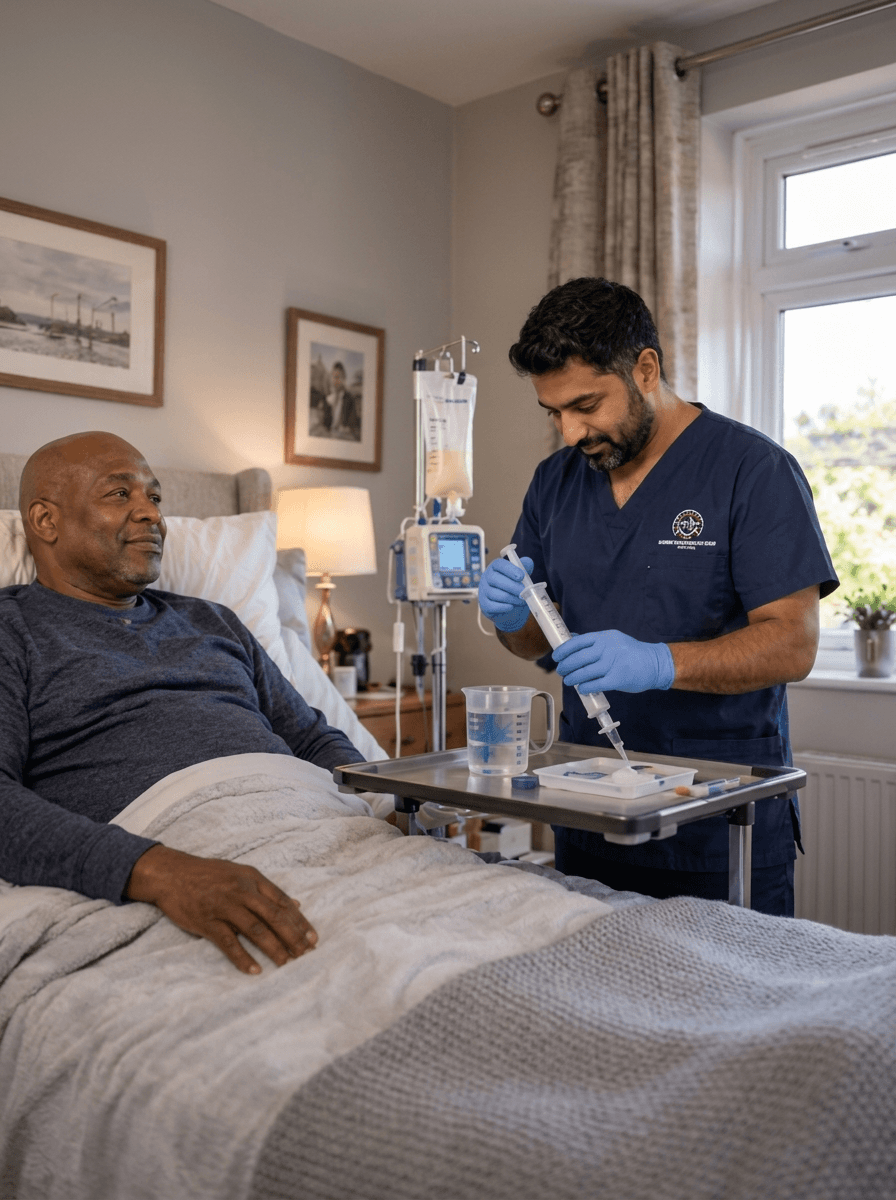
OUR CLINICAL APPROACH
Assess carefully. Train properly. Follow the prescribed plan. Observe closely. Escalate early. Review regularly.
How our PEG feeding care is organised
01 — Referral
We begin by gathering information about the person’s current enteral feeding arrangements, wider health needs and the type of home support required.
02 — Clinical Assessment
Our team reviews the feeding tube, prescribed regimen, hydration, medicines, positioning, stoma care and relevant risks alongside the person’s wider daily needs.
03 — Personalised Care Plan
Clear instructions are developed around feeding, flushing, equipment, medication, observation, documentation and escalation.
04 — Training & Competency
Carers assigned to the package receive appropriate PEG and enteral-feeding training and must demonstrate competence for the responsibilities they will undertake.
05 — Safe Start of Care
Care begins once the required staffing, training, documentation, equipment and professional instructions are in place.
06 — Ongoing Review
The package is reviewed when the person’s health, feeding prescription, equipment, medication or circumstances change.
FEEDING METHODS
Supporting your prescribed feeding routine
There is no single feeding routine that is right for everyone.
The individual’s dietitian or specialist nutrition team determines the appropriate feed, volume, timing and method according to nutritional requirements and clinical circumstances.
Our carers follow that prescribed plan.
Bolus Feeding
Bolus feeding involves giving a prescribed amount of feed at particular times rather than continuously throughout the day.
For some people, this can allow feeding times to fit more naturally around normal daily routines.
Where bolus feeding is prescribed, trained carers can support preparation, administration, flushing and documentation according to the person’s individual plan.
Pump Feeding
Some people receive feed gradually using an enteral feeding pump.
Pump feeding may take place during the day, overnight or according to another prescribed schedule.
Our carers can support the equipment and feeding routine within their training and competency, observe the person during feeding and follow agreed procedures if an issue occurs.
Continuous Feeding
Where nutrition needs to be delivered over an extended period, continuous feeding may form part of the prescribed regimen.
Care can be organised around this so that the individual’s wider routines and support needs continue alongside their enteral nutrition.
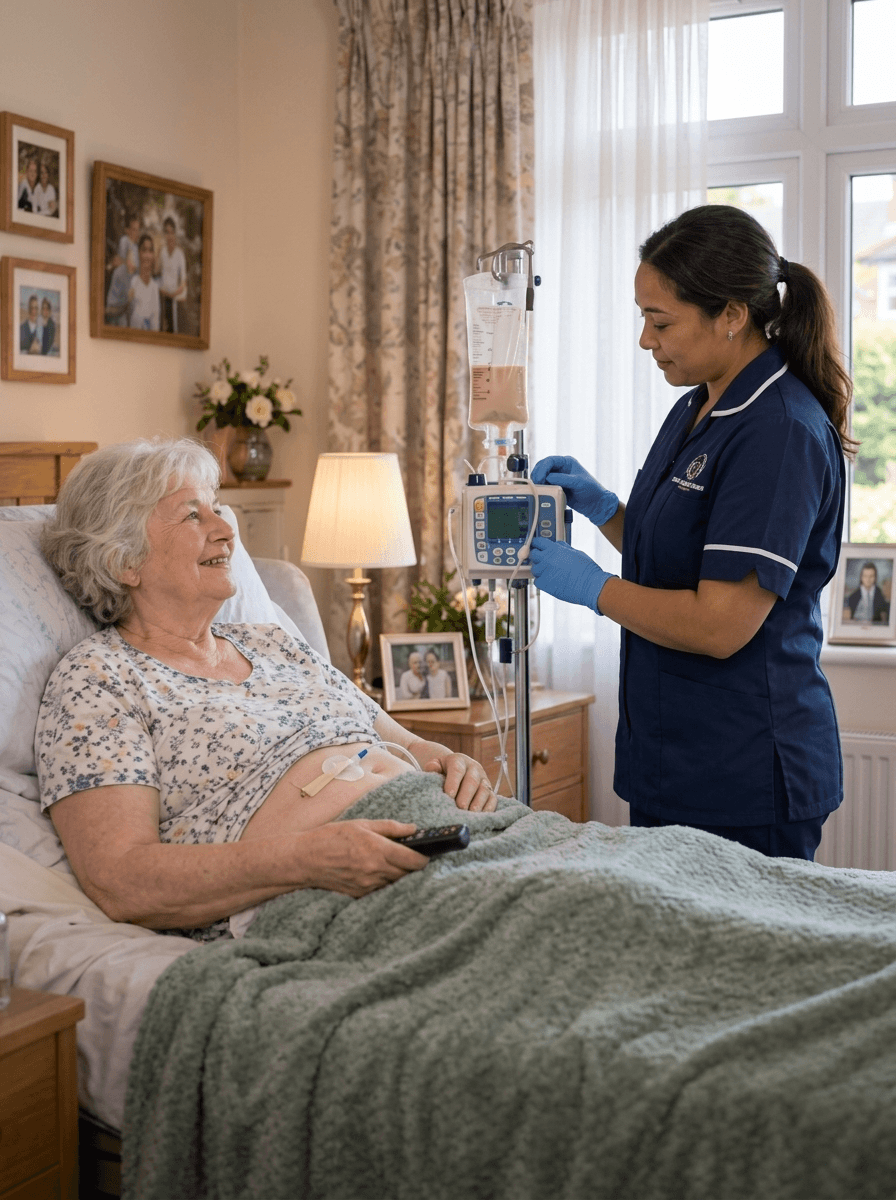
PEG tube and stoma care
The area where the gastrostomy tube passes through the abdomen is known as the stoma site.
Routine observation and hygiene are important parts of PEG care.
Our trained carers follow the individual’s specific tube-care instructions when providing support.
They observe the tube and surrounding skin and remain alert to changes such as unexpected redness, swelling, pain, leakage, discharge, bleeding or changes in the apparent position or condition of the tube.
Where something falls outside the person’s expected presentation or routine plan, staff do not improvise treatment.
They follow the agreed escalation procedure and contact the appropriate healthcare professional.
This combination of routine observation and early escalation helps maintain safe care at home.
Hydration through a PEG tube
Adequate hydration remains just as important when someone receives nutrition through a feeding tube.
A person’s dietitian or healthcare professional may prescribe water flushes or additional fluid alongside their nutritional feed.
Our carers can support the prescribed hydration plan, administer authorised water flushes and accurately record the support provided.
The amount and timing of water are individual.
We therefore do not apply a standard volume to every person. Staff follow the specific instructions documented for the person receiving care, including any restrictions or additional requirements associated with their wider health conditions.
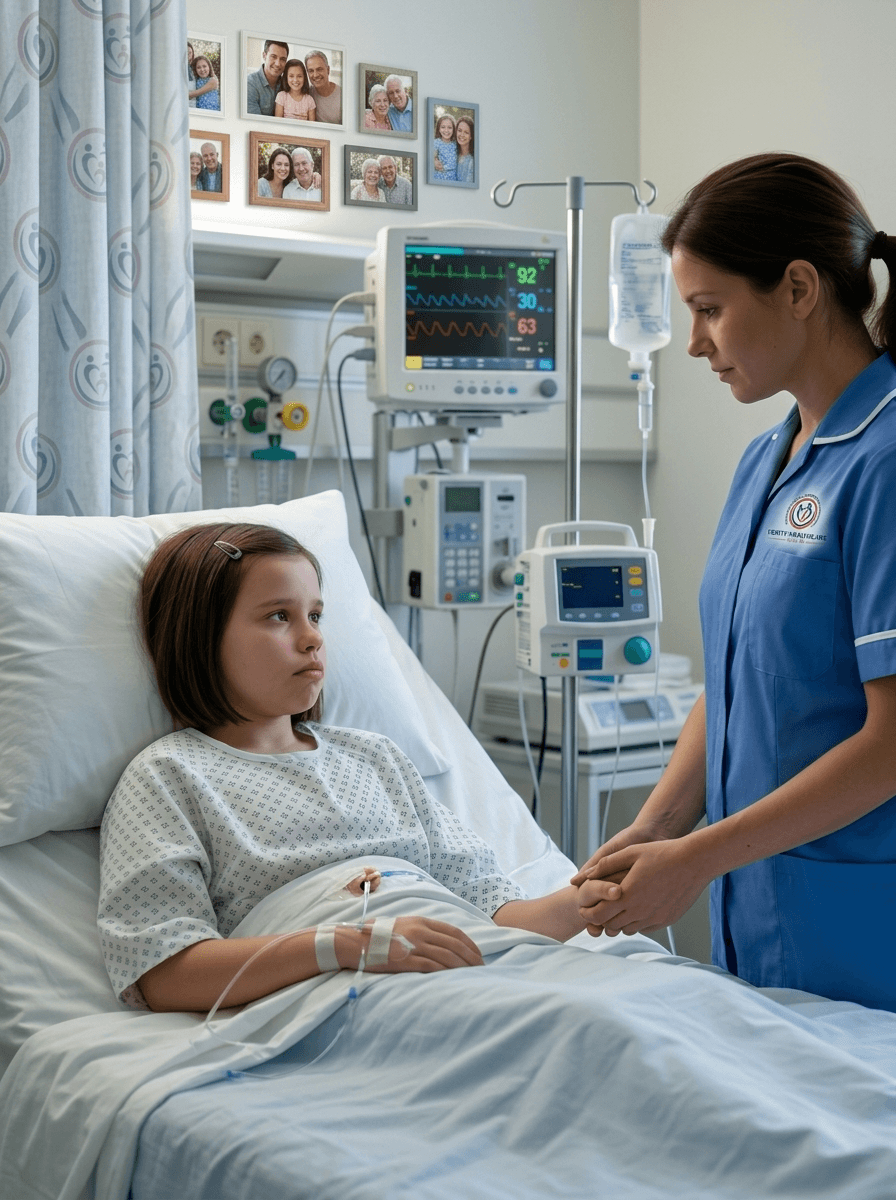
Medication through a PEG tube
For some people, a PEG or gastrostomy tube is also an authorised route for medication.
Giving medicine through a feeding tube requires careful consideration because not every medicine or formulation is suitable for enteral administration.
Where medication through the PEG has been clinically authorised, our trained carers follow the person’s medication plan and instructions supplied by the appropriate prescriber or pharmacist.
Care includes using the prescribed route and formulation, administering medicines separately where instructed, completing required flushing and recording administration in accordance with the individual’s medicines plan.
Staff do not independently decide to crush tablets, open capsules, alter formulations or change the prescribed route of administration.
Where there is uncertainty, the matter is escalated to the appropriate pharmacist, prescriber, nurse or other healthcare professional.
Safe PEG feeding at home
Excellent PEG care depends on staff knowing both what to do and when to stop and ask for help.
Carers follow the person’s individual enteral feeding plan rather than relying on generic routines.
Before and during support, staff remain observant for anything that appears different from the individual’s normal presentation.
This can include changes involving the tube, stoma, feed tolerance, comfort, breathing or general wellbeing.
Where the care plan identifies a potential complication, staff follow the agreed instructions and escalation pathway.
We place particular emphasis on infection prevention, appropriate positioning, prescribed flushing, accurate recording and prompt reporting of concerns.
Our care teams do not undertake procedures outside their role, training, competency or clinical authority.

Need PEG feeding support following hospital discharge?
Early planning gives us time to review the feeding regimen, train staff and coordinate safely with the hospital and community teams.
Recognising when something is not right
Most established PEG feeding can be managed successfully at home, but problems can occasionally arise.
The individual care plan should explain what staff need to observe and who to contact if something changes.
A tube may become difficult to flush, appear damaged or move unexpectedly. The person may develop discomfort, leakage or changes around the stoma. They may experience nausea, vomiting or difficulty tolerating the prescribed feed.
There may also be circumstances where feeding needs to be paused and specialist advice sought.
What staff do next depends on the person’s individual plan and clinical instructions.
Our emphasis is therefore on recognition, safe initial action and timely escalation, rather than carers attempting unauthorised clinical treatment.
Preventing PEG tube blockages
Keeping a feeding tube functioning well is an important part of enteral care.
Prescribed flushing before and after feeds and medicines can help reduce the risk of blockage.
Correct medication preparation is also important because unsuitable formulations or medicines administered incorrectly can cause problems with feeding tubes.
Our carers follow the person’s specific flushing and medication instructions.
If a tube becomes blocked, staff follow the agreed troubleshooting procedure for that particular device and seek specialist advice where required rather than using unapproved techniques.
Call us today to arrange live-in care.
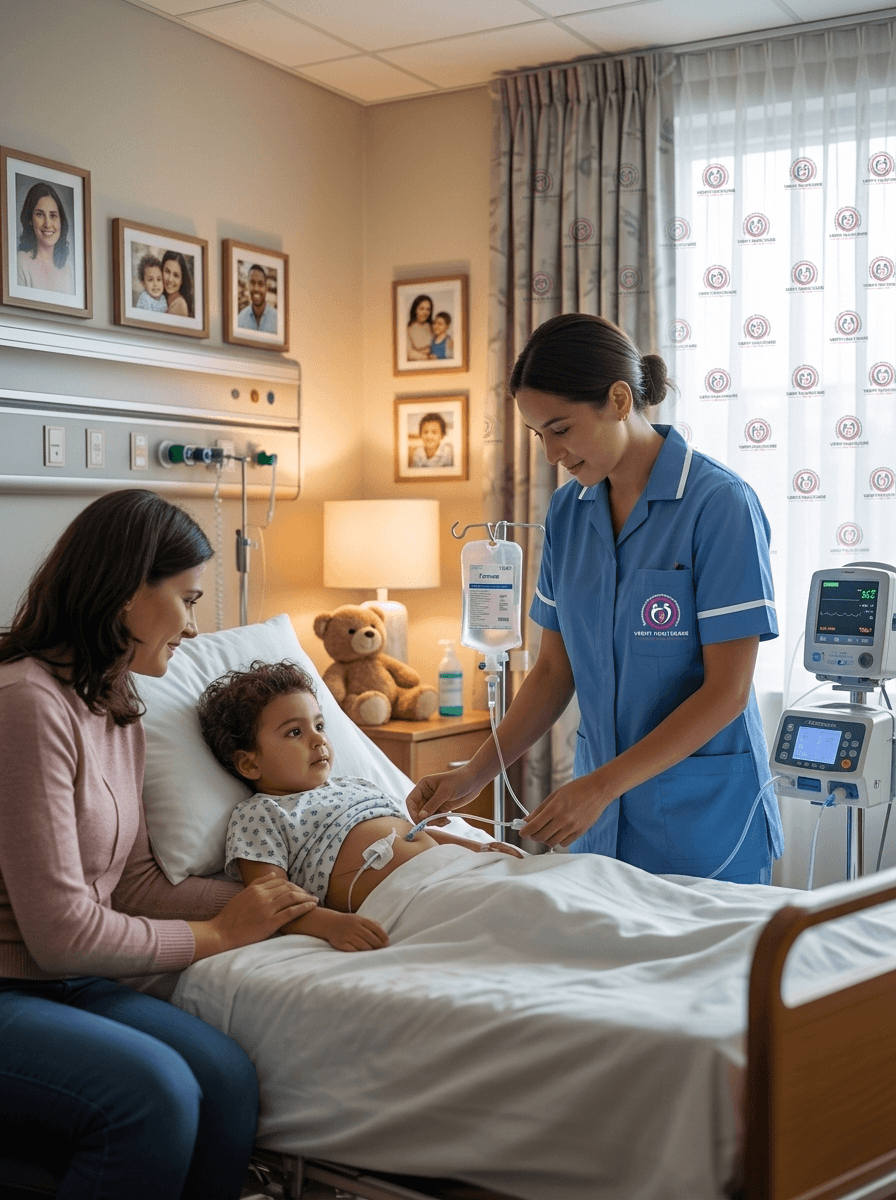
Infection prevention and PEG site hygiene
Good hand hygiene and careful management of enteral equipment are fundamental to safe PEG care.
Our staff follow infection-prevention procedures when preparing feeds, handling feeding equipment and providing stoma care.
The gastrostomy site is cared for according to the person’s current clinical instructions, with attention to cleanliness, dryness and changes in the surrounding skin.
Feed and equipment are handled according to the person’s prescribed system and manufacturer or clinical instructions.
These precautions help reduce avoidable contamination while making enteral care feel safe and routine within the home.
Who may need PEG feeding?
PEG feeding can support people with many different health conditions.
Someone recovering from a stroke or acquired brain injury may have difficulty swallowing safely. A person with a progressive neurological condition may gradually lose the ability to take enough nutrition orally.
People with motor neurone disease, multiple sclerosis, cerebral palsy or other neurological conditions may require enteral support at different stages of their condition.
PEG feeding may also form part of care following some cancers or treatments affecting the head, neck, oesophagus or swallowing mechanism.
Children and young people with complex neurological, congenital or developmental needs may also receive nutrition through a gastrostomy.
The reason for PEG feeding and the individual’s overall healthcare needs influence the type of home-care support required.
At Verity Healthcare, we assess the person rather than simply the tube.
PEG feeding and swallowing difficulties
Some people require enteral feeding because they have dysphagia, meaning difficulty swallowing safely or effectively.
Dysphagia may increase the risk of food, drink or saliva entering the airway.
Where a speech and language therapist has provided recommendations relating to eating, drinking, oral care, positioning or communication, our care team can incorporate those instructions into everyday support.
Having a PEG does not automatically tell us whether someone can eat or drink by mouth.
That decision belongs to the appropriate healthcare professionals following assessment.
Our carers therefore follow the person’s documented plan and do not independently introduce, restrict or change oral intake.
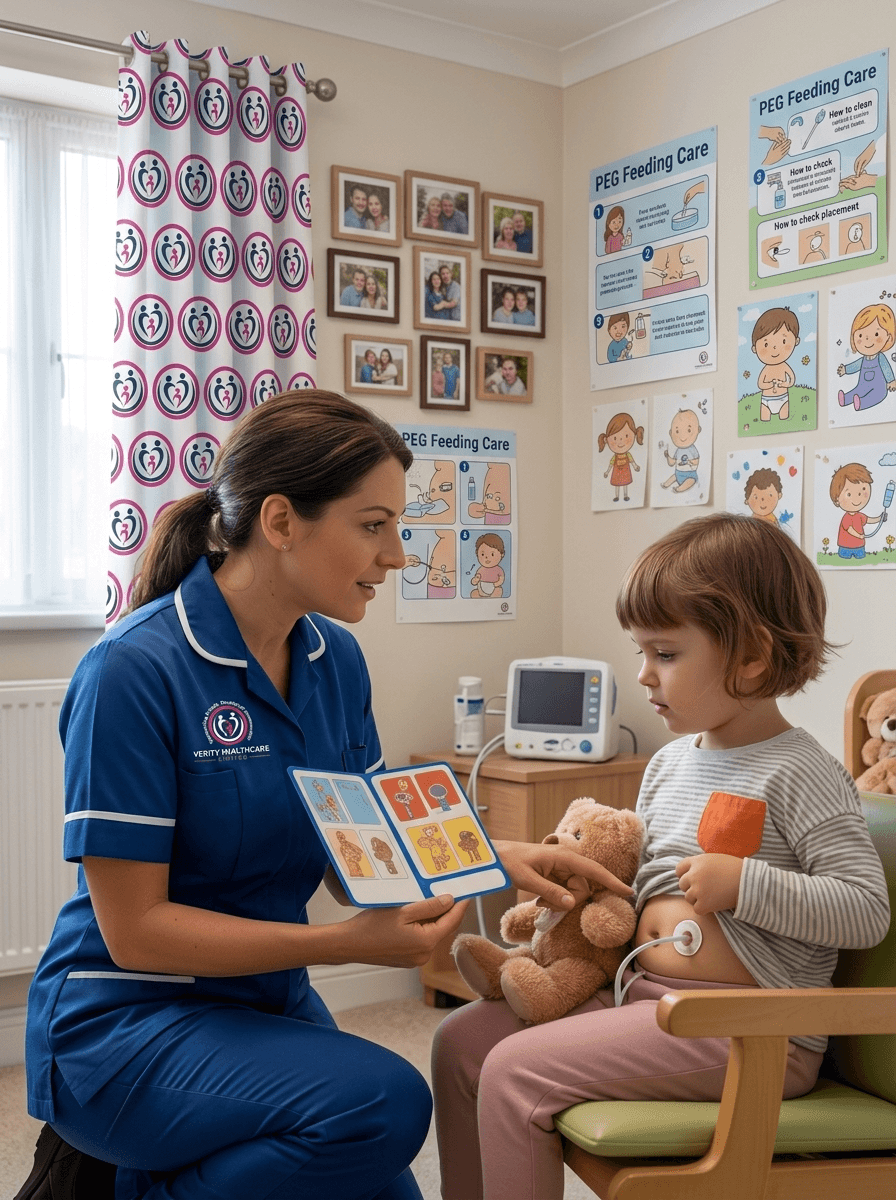
Oral care remains important
When someone receives most or all nutrition through a PEG, it can be easy to assume that mouth care is no longer important.
It remains an essential part of wellbeing.
Good oral care can support comfort, dignity and general health, particularly for people who experience dry mouth, reduced oral intake or swallowing difficulties.
Where oral care forms part of the person’s support plan, our carers can provide or assist with it sensitively and according to individual needs.
Call us today to arrange home care.
Comfort and positioning during feeding
The person’s position during and after enteral feeding can be an important element of their prescribed care.
Some individuals require specific positioning because of reflux, aspiration risk, respiratory problems, mobility limitations or other health conditions.
Our carers follow the positioning instructions documented by the person’s healthcare team and ensure that equipment and moving-and-handling requirements are considered as part of the wider care package.
This is particularly important where PEG feeding occurs alongside significant physical disability or complex neurological needs.
PEG feeding as part of complex care
For many people, PEG feeding is only one part of a larger package of healthcare.
Someone living with a severe neurological condition may also require assistance with mobility, continence, positioning, communication and seizure management.
A person with an acquired brain injury may need behavioural, cognitive and rehabilitation-focused support.
Someone receiving invasive ventilation may require enteral nutrition alongside tracheostomy and respiratory care.
Verity Healthcare’s complex-care approach allows these requirements to be considered together.
Rather than seeing the PEG tube as an isolated procedure, we build one coordinated support plan around the person’s complete clinical and everyday needs.
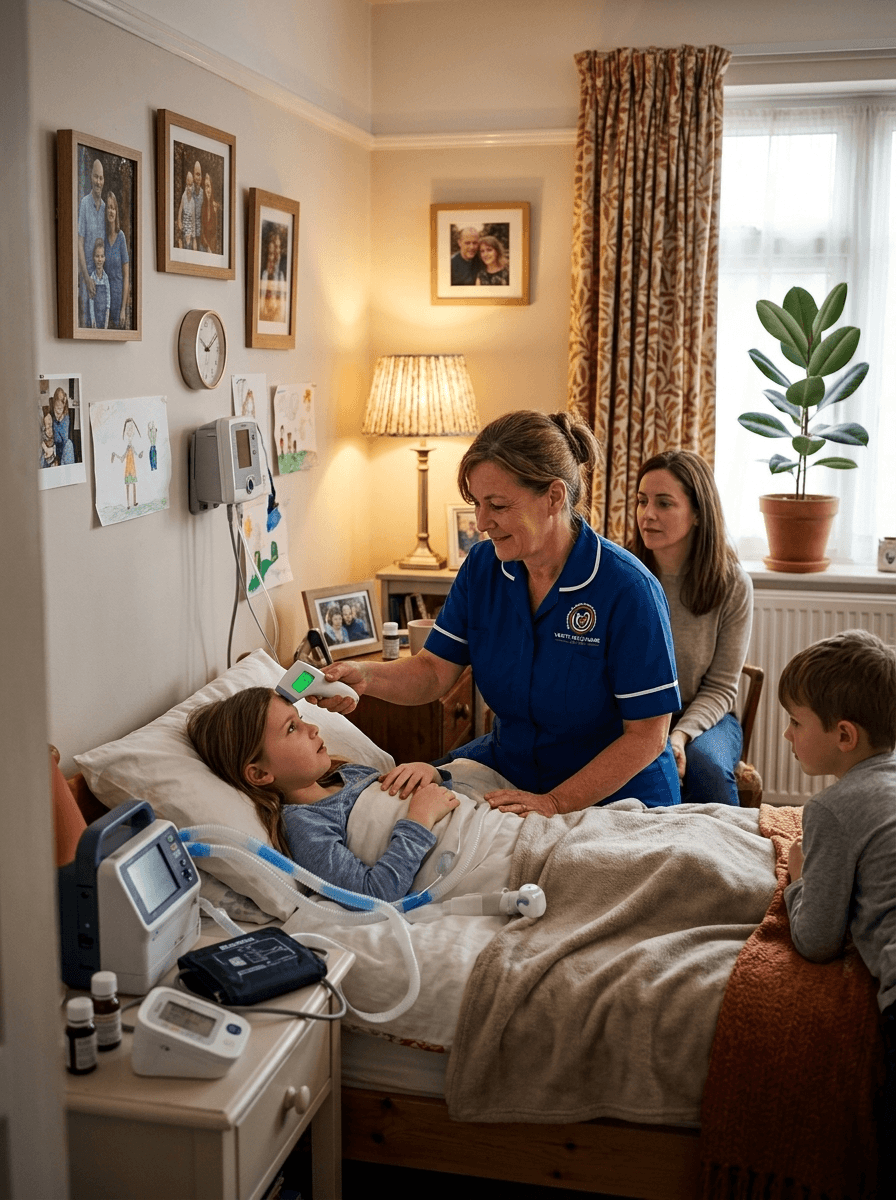
24-hour PEG and complex care at home
Some people with PEG tubes remain highly independent and only require support at particular feeding times.
Others have more extensive disabilities or complex healthcare needs and may require care throughout the day and night.
Where appropriate, Verity Healthcare can assess the need for a more comprehensive package of support, including 24-hour care, waking-night care or live-in arrangements depending on the individual’s needs and commissioning arrangements.
The aim is to provide enough support to maintain safety without unnecessarily reducing the person’s independence.

Returning home with a PEG tube
Being ready to leave hospital is often a positive milestone, but going home with a newly placed feeding tube can feel overwhelming.
Families may suddenly be thinking about feeds, pumps, syringes, medication, supplies and what to do if something goes wrong.
Verity Healthcare can become involved as part of the discharge-planning process.
With appropriate consent, we can communicate with hospital teams, dietitians, nutrition nurses, community professionals, case managers and commissioners to understand the person’s enteral feeding and wider care requirements.
This allows us to identify the right staffing arrangements, review training and competency needs and prepare the personalised care plan before care begins.
Our aim is to make the transition from hospital to home planned, coordinated and reassuring.
Working with your nutrition and healthcare team
Safe enteral feeding at home works best when everyone involved understands the same plan.
With appropriate consent, Verity Healthcare can work alongside the individual’s dietitian, nutrition nurse, GP, pharmacist, district nurse, speech and language therapist, specialist consultant, community nursing team and other relevant professionals.
The dietitian or nutrition team remains responsible for important clinical decisions such as the nutritional prescription and required feeding regimen.
Pharmacists and prescribers provide appropriate guidance around medicines.
Our role is to translate those professional instructions into consistent, safe day-to-day support at home.
Life beyond PEG feeding
Having a feeding tube should not mean that everyday life becomes a series of clinical procedures.
Care can be organised around the person’s social activities, education, employment, family life and preferred routines.
For one person, that might mean arranging feeds around university lectures.
For another, it might involve making sure their feeding routine allows them to go out with friends or attend a family celebration.
A child may need enteral care integrated sensitively around school, play and family routines.
We aim to provide the clinical support required while preserving the ordinary experiences that give life meaning.
PEG care should support life—not take it over.
Supporting independence with PEG care
Some people manage much of their enteral feeding independently.
Others may be able to participate in certain parts of the routine even when a carer provides most of the support.
We encourage people to remain involved wherever this is safe and appropriate.
That may mean choosing the timing of care within the prescribed regimen, preparing equipment, managing part of the feeding routine or learning to become more confident with their own PEG.
The person’s abilities, wishes and clinical circumstances guide the approach.
Our philosophy is to support people to do what they can safely do for themselves rather than creating unnecessary dependence on care workers.
PEG feeding care for children and young people
A feeding tube can become part of family life when a child or young person cannot safely meet their nutrition and hydration needs by mouth.
Parents often become highly knowledgeable about their child’s feeding routine, equipment and normal presentation.
Where Verity Healthcare provides a paediatric or young-person’s package, we work in partnership with the child, their family and the professionals involved.
Care considers clinical requirements alongside development, communication, education, play, sleep and family routines.
Staff supporting the child must have the appropriate training and competency for the responsibilities they undertake.
The objective is not simply to deliver feed.
It is to help the child or young person participate in family and community life as fully as possible.
Supporting families with enteral feeding care
Families frequently carry a considerable amount of responsibility when someone they love has complex feeding needs.
They may organise supplies, medication, appointments and equipment while also providing large amounts of hands-on care.
Having a properly trained care team can provide valuable reassurance and give relatives time to return to other aspects of family life.
We recognise that families often understand the person’s routines and responses exceptionally well.
Where the individual wishes them to be involved, we value that knowledge and incorporate it into assessment and care planning while maintaining clear professional responsibilities.
Who are Verity Healthcare?
Verity Healthcare is a CQC-regulated home-care provider supporting children, young people and adults to remain safe, independent and well supported in their own homes and communities.
Our services range from visiting and live-in care to nursing and complex-care packages for people with significant clinical needs.
Our nursing team supports the clinical governance of specialist services including enteral feeding, tracheostomy care, respiratory support, medication and other delegated healthcare activities.
For someone who has a PEG or gastrostomy tube, our role is to combine safe clinical support with compassionate, person-centred everyday care.
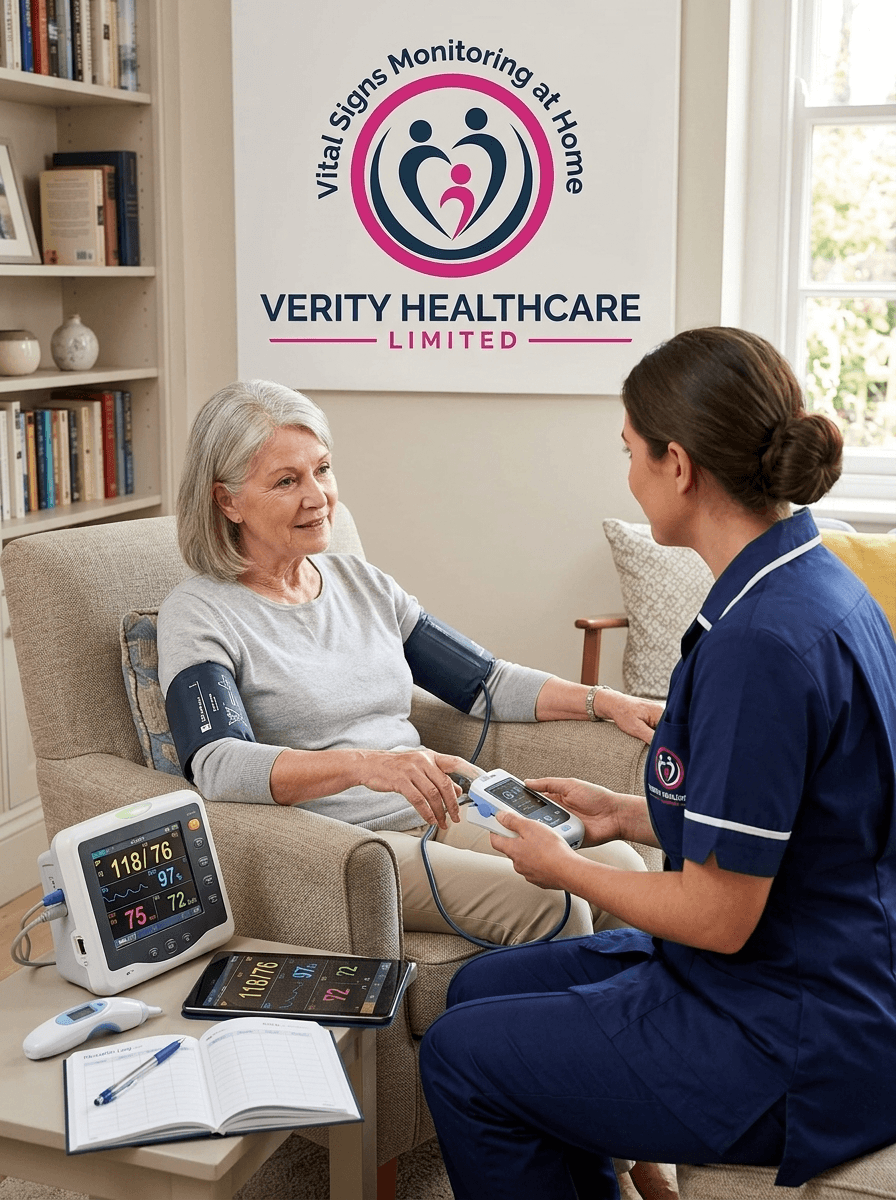
Why choose Verity Healthcare for PEG feeding care?
Nurse-Led Oversight
Our nursing and clinical team can support assessment, care planning, competency and review for complex enteral feeding packages.
Personalised Feeding Support
Care follows the individual’s prescribed feeding and hydration plan rather than a generic PEG routine.
Competency-Assessed Carers
Care workers undertake relevant learning and competency assessment before independently carrying out delegated PEG responsibilities.
Multidisciplinary Working
We work with dietitians, nutrition nurses, pharmacists, GPs and other healthcare professionals to help maintain coordinated support.
Whole-Person Care
PEG feeding can be combined with personal care, medication, mobility, neurological care and other complex support within one personalised package.
Independence & Quality of Life
Our aim is to deliver clinical support in a way that protects the person’s routines, relationships, choices and ability to participate in everyday life.
Experienced registered nurses
Verity Healthcare’s registered nurses provide clinical leadership and support across complex home-care packages.
For people receiving enteral nutrition, nursing involvement can include assessment, risk planning, care-plan development, staff competency, escalation arrangements and communication with the wider healthcare team.
This helps create a clear structure around the carers providing day-to-day PEG support and gives families and commissioners greater reassurance that clinical risks are being properly managed.
Eirini Stamkopoulou – Lead Nurse
Providing nursing leadership, clinical oversight and support for complex and delegated healthcare activities across Verity Healthcare services.
How to begin your PEG feeding care journey
1. Speak to our dedicated team
Call 0330 0436 899 and tell us about the support you or your loved one requires.
If you are arranging care on behalf of someone else, we can discuss what information will be needed for clinical assessment.
2. Free, no-obligation assessment
We take time to understand the PEG or gastrostomy, feeding routine, hydration, medication, wider health needs and the person’s everyday preferences.
3. Carefully prepared care team
We develop the care plan, identify suitable care workers and confirm that relevant training and competency requirements are in place.
Once care starts, the package is monitored and reviewed so that it continues to reflect the person’s needs.
Call us today to arrange PEG feeding care
Whether you require scheduled feeding visits, overnight assistance or a wider package of complex care, talk to Verity Healthcare about creating support around you.
PEG feeding referrals for healthcare professionals
Verity Healthcare welcomes enquiries from NHS Continuing Healthcare teams, Integrated Care Boards, hospital discharge teams, case managers, local authorities and other healthcare professionals seeking support for someone receiving enteral nutrition at home.
Early referral enables us to review the clinical information and consider staffing, training, competency and mobilisation requirements.
Where appropriate, our nursing team can liaise with the professionals involved to understand the person’s prescribed feeding regimen, equipment, medication, risks and expected outcomes.
Need to discuss an enteral-feeding package?
Call 0330 0436 899
We're a fully regulated home care provider
Frequently asked questions about PEG feeding care
PEG stands for Percutaneous Endoscopic Gastrostomy.
It is a tube placed through the abdominal wall into the stomach that can be used to provide prescribed nutrition, fluids and certain medicines.
PEG feeding care at home is specialist support for someone who receives some or all of their nutrition, fluids or medicines through a gastrostomy tube while living in their own home.
The exact support required depends on the individual and their prescribed clinical plan.
A PEG may be recommended when a person cannot safely or adequately meet their nutritional needs by mouth but their gastrointestinal system can still be used for enteral nutrition.
This can happen following neurological illness or injury, swallowing difficulties, progressive conditions and certain cancers or treatments.
PEG feeding is one type of enteral feeding.
Enteral feeding means delivering nutrition directly into the stomach or intestine through a feeding tube. Other enteral feeding routes include nasogastric, jejunal and other gastrostomy systems.
Yes.
Many people receive long-term enteral nutrition successfully at home when the appropriate feeding plan, equipment, training, professional support and care arrangements are in place.
Care workers can support delegated PEG feeding where it is clinically appropriate and they have received the required training, competency assessment and individual instructions.
The responsibilities delegated to the carer depend on the person’s care plan and the healthcare professionals involved.
Bolus feeding involves giving a prescribed quantity of enteral feed at particular times rather than continuously.
The person’s dietitian determines whether bolus feeding is appropriate and specifies the amount and frequency.
Yes.
Some people receive enteral feed through a feeding pump over a prescribed period.
The exact speed, volume and schedule are determined by the person’s nutrition professionals.
Some medicines can be administered through a PEG when the route and preparation method have been authorised by the appropriate prescriber or pharmacist.
Not all medicines or formulations are suitable.
Staff therefore follow the person’s medication plan and do not independently crush or alter medicines.
Prescribed water flushing helps maintain tube patency and can support hydration.
Flushing is commonly required around feeding and medication, but the exact amount and timing should follow the person’s individual instructions.
Routine PEG care usually includes observing and cleaning the stoma according to the person’s clinical plan and reporting abnormalities such as unexpected pain, redness, swelling, leakage, discharge or bleeding.
The person’s care plan should contain instructions for responding to a blocked tube.
Carers follow approved troubleshooting procedures within their competency and seek specialist advice where required rather than using unapproved techniques.
A displaced or completely removed gastrostomy tube can require urgent assessment because the tract may begin to close.
Staff should follow the individual’s emergency plan and seek the appropriate specialist or urgent clinical advice rather than attempting an unauthorised replacement.
Sometimes.
Having a PEG does not automatically mean that all eating and drinking by mouth must stop.
Whether oral intake is safe depends on the person’s swallowing ability and clinical assessment. Staff follow the recommendations documented by the appropriate professionals.
Yes.
Enteral feeding may be used when swallowing is unsafe or insufficient. Dysphagia assessment and decisions about oral intake are normally led by appropriate healthcare professionals such as speech and language therapists and the wider clinical team.
Yes, subject to assessment.
People recovering from stroke can sometimes require temporary or longer-term enteral nutrition because of swallowing difficulties or inadequate nutritional intake.
Yes.
PEG feeding may form one part of a wider acquired brain injury care package involving mobility, communication, cognition, personal care or rehabilitation support.
Where the individual’s needs fall within our service capability and the appropriate clinical, staffing and competency arrangements can be established, PEG care can form part of a wider complex-care package involving respiratory or airway support.
We can assess appropriate referrals involving children and young people with enteral feeding requirements where the necessary safeguarding, clinical, staffing and competency arrangements can be established.
Where required, care can be structured around prescribed overnight feeding or wider waking-night support following individual assessment.
Yes, where the person’s overall needs require continuous or 24-hour support and the appropriate staffing and commissioning arrangements can be established.
Some people with significant ongoing health needs receive care funded through NHS Continuing Healthcare or other NHS commissioning arrangements, subject to individual assessment and eligibility.
Verity Healthcare can work with the responsible commissioning team where a package is being developed.
The cost depends on the frequency and length of support, the person’s wider healthcare needs, staffing model and clinical complexity.
Following assessment, we can discuss the appropriate care package with the individual, family, case manager or commissioner.
Related specialist care services
Nursing Care
Nurse-led clinical support for people requiring specialist healthcare within their own homes.
Complex Care
Personalised home-care packages for people living with advanced or multiple healthcare needs.
Ventilator Care
Specialist respiratory support for people receiving invasive or non-invasive ventilation at home.
Tracheostomy Care
Specialist airway and tracheostomy care delivered according to individual clinical plans.
Acquired Brain Injury Care
Rehabilitation-focused support for people living with acquired or traumatic brain injury.
Neurological Care
Person-centred support for people living with complex or progressive neurological conditions.
Live-in Care
Care within your own home that provides continuity while helping preserve familiar routines and independence.
Nutrition support that lets home stay home
Living with a PEG tube requires careful clinical support, but everyday life should still feel like everyday life.
At Verity Healthcare, we combine nursing oversight, competency-assessed carers and compassionate person-centred support so that enteral feeding can be managed safely alongside the routines, relationships and activities that matter to you.
Whether you are preparing to leave hospital, looking for a new complex-care provider or arranging long-term PEG feeding support for someone you love, speak to our team.
We’re a fully regulated home care provider
Verity Healthcare Limited provides regulated home, nursing and complex-care services designed around individual safety, dignity, choice and quality of life.

Contact us today
Accreditation