Stroke Care at Home
Specialist support for recovery and
independence after stroke.
0330 0436 899
Stroke Care at Home
A stroke can change everyday life in seconds. Movement, communication, swallowing, memory, confidence and energy can all be affected, and the support someone needs may change repeatedly as recovery progresses.
At Verity Healthcare, we provide personalised stroke care at home for people returning from hospital, continuing rehabilitation in the community or living with longer-term effects of stroke. Our care is built around the individual’s abilities, rehabilitation goals, routines and clinical plan, helping them live safely and confidently in the place they know best.
From a few planned visits each day to live-in or 24-hour complex care, we create support around the person rather than expecting the person to fit around a standard care package.
NURSE-LED
Clinical oversight for complex needs
REHABILITATION-FOCUSED
Support that reinforces agreed therapy goals
PERSON-CENTRED
Care built around abilities, choices and routines
COORDINATED
Working alongside stroke, therapy and community teams
Talk to us about stroke care at home
For hospital discharge, rehabilitation support, live-in care or longer-term stroke aftercare.
STROKE IS A MEDICAL EMERGENCY
If someone develops sudden facial weakness, arm weakness or speech difficulty, call 999 immediately. Use FAST: Face, Arms, Speech, Time. Do not wait for a home-care visit or assessment. Sudden symptoms that improve can still be a TIA and require urgent medical assessment.
Stroke care, completely tailored to you
No two strokes affect people in exactly the same way. One person may mainly need support with walking, dressing and preparing meals. Another may experience aphasia, swallowing difficulties, fatigue, cognitive changes or a combination of physical and clinical needs.
Our starting point is therefore not the diagnosis alone. We look at what has changed, what remains possible, what matters to the person and what the hospital or community rehabilitation team is working towards. We then build day-to-day care around those priorities.
The aim is to provide enough support to make daily life safer and more manageable while encouraging the person to do as much as they can safely do for themselves.
How a stroke can affect everyday life
The effects of stroke can be visible, subtle or fluctuate from day to day. Understanding those changes helps us provide support that is patient, enabling and consistent.
Movement & balance
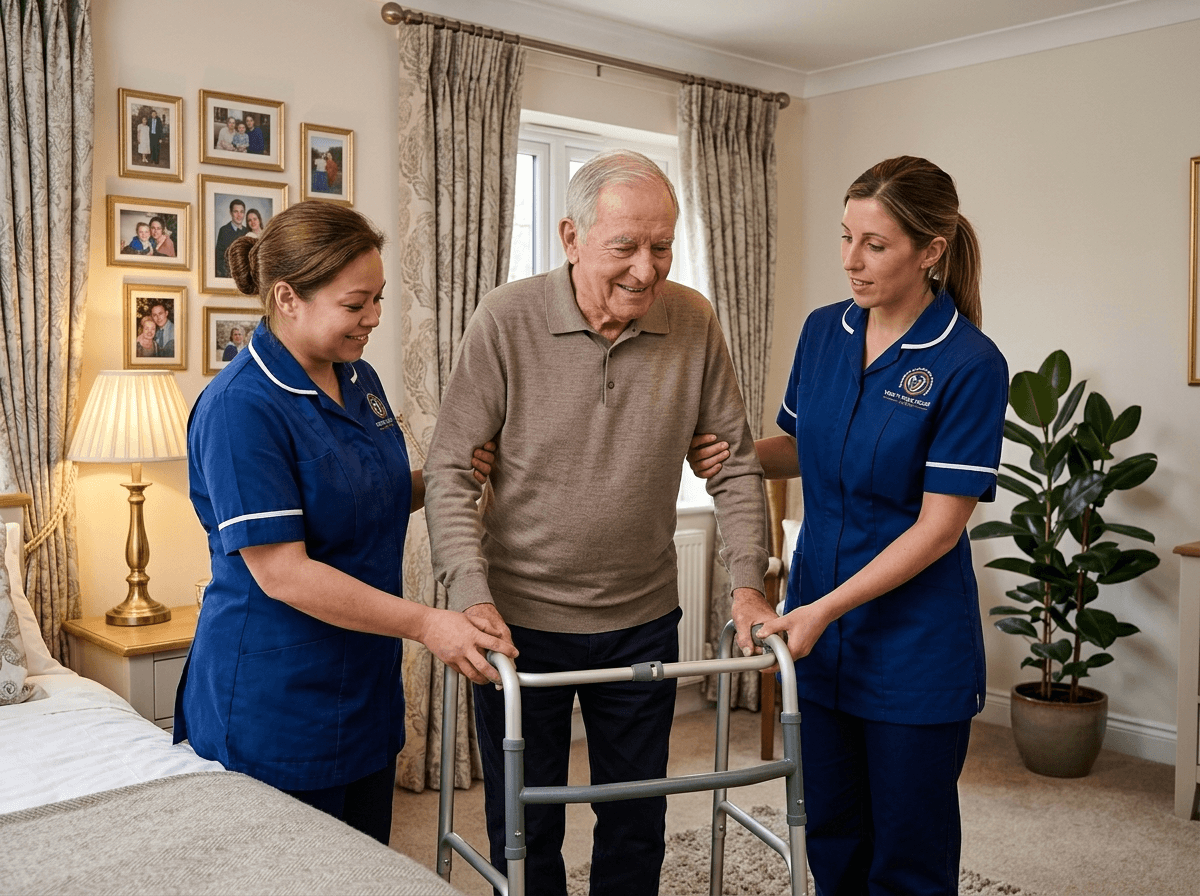
Weakness, altered sensation, poor balance or reduced coordination may affect walking, transfers, dressing and other daily activities. We follow assessed moving-and-handling guidance and encourage safe participation.
Speech & communication
Aphasia, dysarthria or apraxia can make it harder to speak, understand, read or write. Staff adapt communication and follow strategies recommended by speech and language professionals.
Swallowing & nutrition
Dysphagia can affect safe eating, drinking and medicines. Carers follow the person’s documented swallowing, positioning, texture and fluid instructions and escalate concerns promptly.
Memory & thinking
Stroke can affect attention, memory, planning, judgement or awareness. Consistent routines, prompts, visual cues and reduced distraction can make everyday tasks easier to manage.
Fatigue & stamina
Post-stroke fatigue can be profound and is not simply ordinary tiredness. Care can be paced around energy levels, rest periods and the person’s rehabilitation priorities.
Mood & confidence
Anxiety, low mood, emotional changes and loss of confidence can follow stroke. Familiar carers provide reassurance, encouragement, companionship and prompt escalation when wellbeing changes.
RECOVERY SHOULD FEEL LIKE LIFE — NOT A SERIES OF TASKS
Supporting rehabilitation in everyday life
Specialist stroke rehabilitation is led by the appropriate healthcare professionals. Verity’s role is to help the agreed rehabilitation plan work consistently in the home environment.
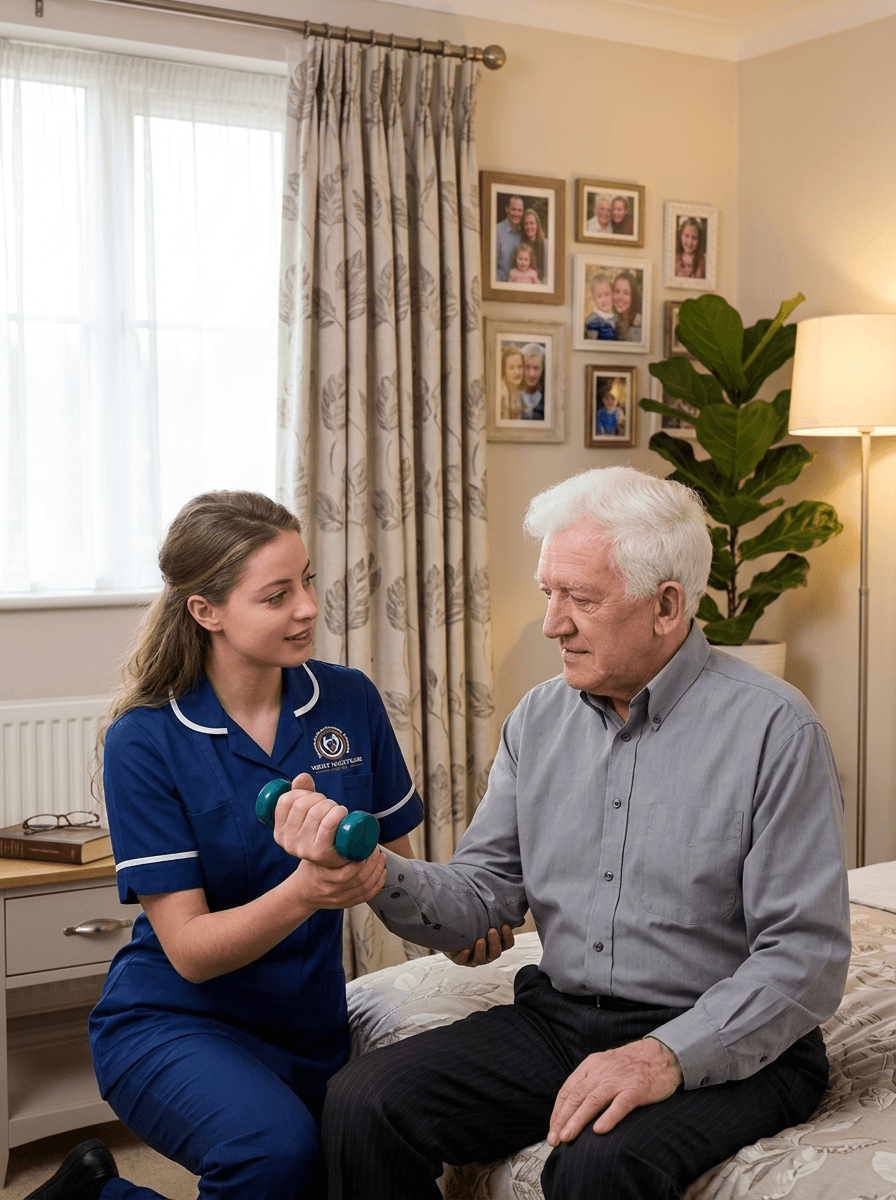
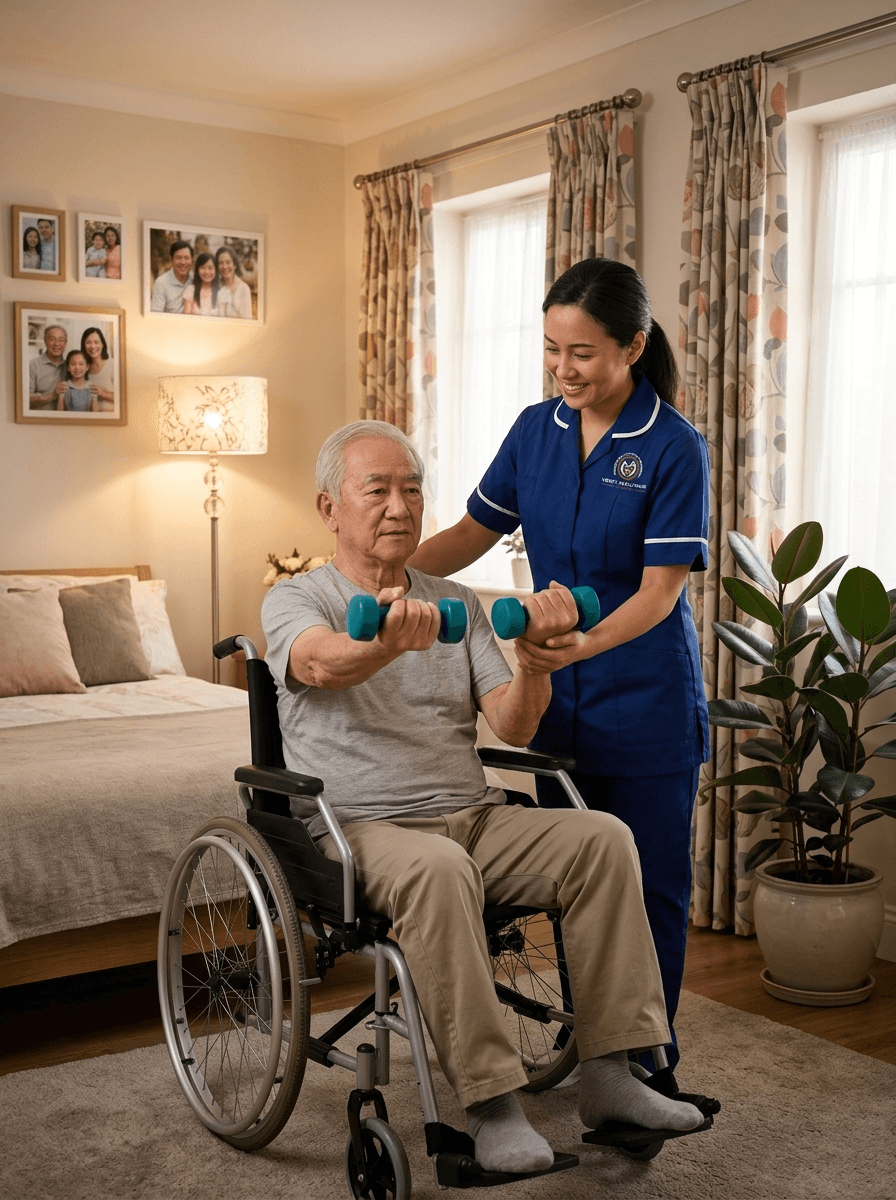
With clear instructions from the physiotherapist, occupational therapist, speech and language therapist or wider stroke team, trained carers can help the person practise agreed activities, use prescribed equipment, follow communication strategies and repeat functional routines between therapy sessions. This might mean supporting a safe transfer technique, encouraging use of the affected arm during a daily task, practising therapist-recommended speech work, or helping someone use memory prompts to organise their morning.
We do not independently prescribe therapy or change clinical rehabilitation programmes. When abilities, fatigue, pain, swallowing, behaviour or other needs change, staff record what they observe and follow the agreed escalation route so the relevant professional can review the plan.
What our stroke aftercare can include
Personal care
Sensitive support with washing, bathing, dressing, grooming, toileting and continence while encouraging the person to retain skills and make choices.
Mobility & transfers
Support with safe movement, walking aids, transfers, positioning and agreed moving-and-handling techniques, including use of prescribed equipment where staff are trained.
Medication support
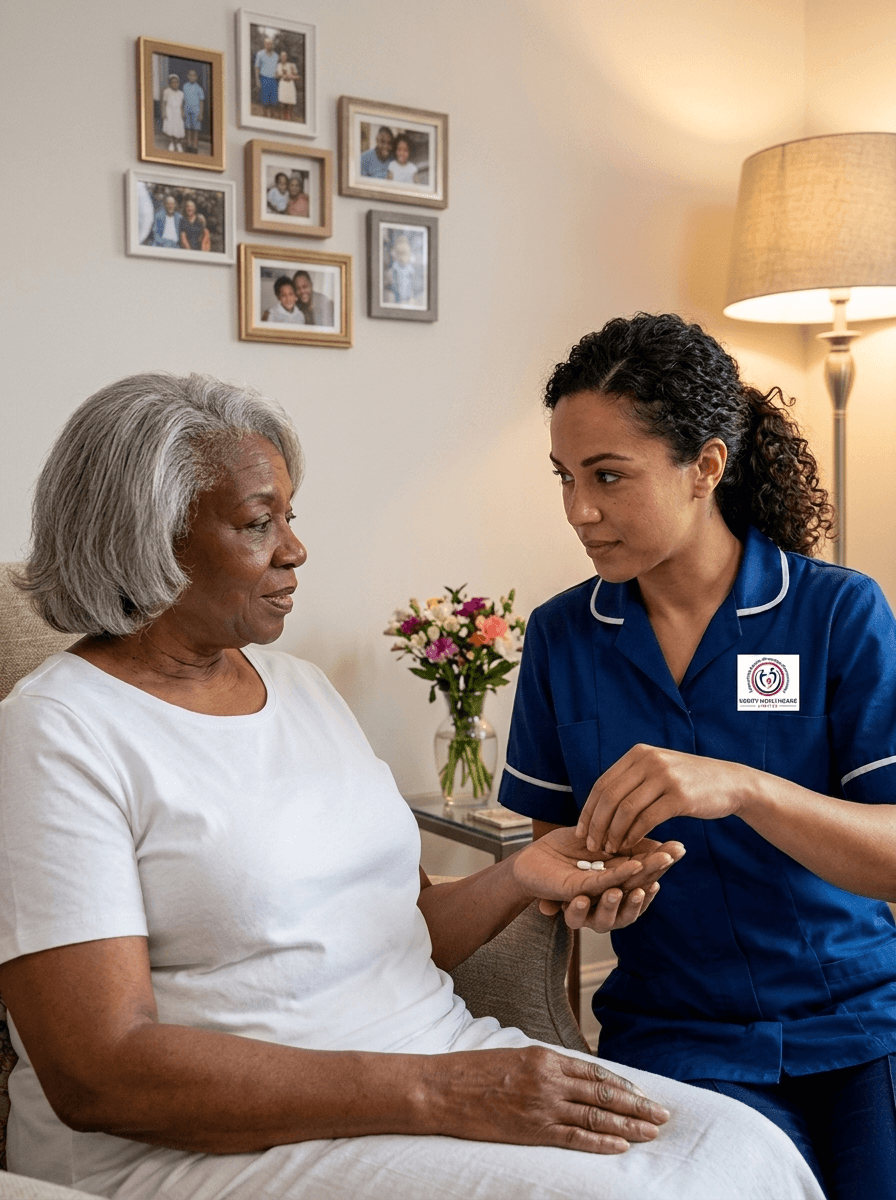
Prompting, assistance or administration in line with the care plan, prescription and Verity’s medicines procedures, with accurate recording and escalation of concerns.
Meals, hydration & swallowing
Meal preparation and support with eating and drinking in line with dietary, dysphagia and texture-modification instructions from the responsible clinicians.
Communication support
Extra time, simple language, pictures, writing, gestures or communication aids as appropriate, following the person’s individual communication plan.
Cognitive support
Structured routines, reminders, calendars, labels, alarms and task prompts where these have been agreed as helpful for memory, attention or executive-function difficulties.
Fatigue-aware routines
Planning essential activities around the person’s energy, building in rest and avoiding unnecessary rushing while continuing to encourage meaningful participation.
Home & community life
Support with household routines, shopping, appointments, social contact, hobbies and gradual return to community activities where safe and desired.
Night support
Sleep-in or waking-night support where the person needs help with repositioning, continence, mobility, reassurance or other assessed needs overnight.
Complex clinical support
Where stroke has resulted in more complex needs, care may be coordinated with services such as PEG feeding, tracheostomy, ventilation, seizure management or other delegated healthcare activities after assessment and competency confirmation.
Need support following hospital discharge?
Early referral gives time to assess the home, understand the rehabilitation plan, prepare staff and coordinate a safe start of care.
Coming home after a stroke
Leaving hospital can be a major milestone, but it can also expose practical challenges that were less obvious on the ward. A person may suddenly need to navigate a bathroom, stairs, medication routine, meals, fatigue, family responsibilities and therapy exercises within the realities of their own home.
Verity Healthcare can become involved during discharge planning so that support is ready for the transition home. With the person’s consent, we can communicate with the hospital and community teams, review the discharge information and understand the current rehabilitation goals, medication arrangements, mobility plan, communication needs, swallowing guidance, equipment and identified risks.
Where equipment or home adaptations have been recommended, care starts around the professional instructions already in place. Our focus is to make the home environment work safely for the person while preserving normality and independence wherever possible.
Working with the stroke rehabilitation team
Stroke recovery usually involves several professionals, and good home care depends on everyone working from the same plan. With appropriate consent, Verity can work alongside the person’s stroke consultant or physician, specialist stroke nurse, GP, physiotherapist, occupational therapist, speech and language therapist, dietitian, pharmacist, district nurse, community rehabilitation team, social worker, case manager and other relevant professionals.
We incorporate agreed instructions into the care plan, make them clear for the staff providing day-to-day support, document relevant observations and share information through agreed channels. When the professional plan changes, the home-care plan is reviewed so that support remains aligned.
ONE PERSON. ONE COORDINATED PLAN. ONE HOME.
A rehabilitation-focused daily routine
Recovery can be supported through ordinary moments. Getting washed, choosing clothes, making a drink, transferring to a chair, walking to the garden, using a communication aid or preparing for an appointment can all become opportunities to maintain or rebuild skills when they are approached in the way agreed by the rehabilitation team.
Our carers are encouraged to avoid doing everything for the person simply because it is faster. Instead, they give the right level of assistance, time and prompting, recognise effort and progress, and adapt to good days and difficult days without losing sight of the person’s goals.
Mobility, transfers and falls prevention
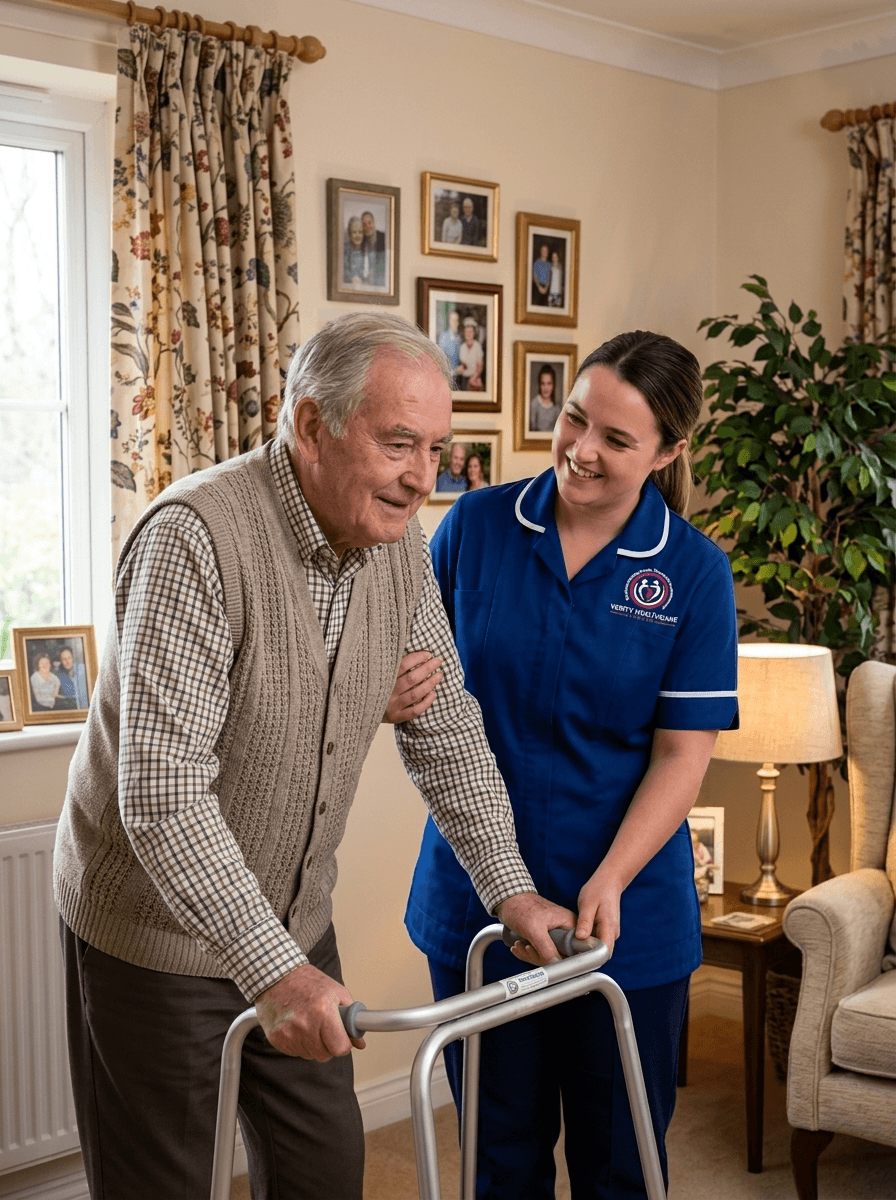
Stroke can affect strength, sensation, balance, spatial awareness and confidence. Before carers assist with mobility, we review the assessed moving-and-handling plan, the person’s usual transfer method and any prescribed equipment. This can include walking aids, transfer aids, wheelchairs, specialist seating, bed equipment or other adaptations.
Staff follow the agreed technique rather than improvising. They keep routes clear, make sure frequently used items are accessible and report changes such as increasing weakness, repeated near-falls, pain or reduced ability to transfer. Where the rehabilitation team has provided a programme of safe functional exercises, carers can encourage and support the person to complete them within the agreed instructions.
Communication, aphasia and speech changes
Stroke can affect strength, sensation, balance, spatial awareness and confidence. Before carers assist with mobility, we review the assessed moving-and-handling plan, the person’s usual transfer method and any prescribed equipment. This can include walking aids, transfer aids, wheelchairs, specialist seating, bed equipment or other adaptations.
Staff follow the agreed technique rather than improvising. They keep routes clear, make sure frequently used items are accessible and report changes such as increasing weakness, repeated near-falls, pain or reduced ability to transfer. Where the rehabilitation team has provided a programme of safe functional exercises, carers can encourage and support the person to complete them within the agreed instructions.
Dysphagia, eating and drinking safely
Swallowing difficulty is common after stroke and can increase the risk of choking, dehydration, poor nutrition or aspiration. Carers therefore follow the most recent documented guidance from the speech and language therapist, dietitian or responsible clinical team.
This may include specific positioning, food texture, fluid consistency, pace, supervision, adapted cutlery or other strategies. Staff do not independently change textures, thicken fluids or introduce new swallowing techniques. Coughing, choking, wet or altered voice, breathing difficulty, reduced intake, recurrent chest symptoms or other concerns are escalated in line with the individual plan.
Where a person requires enteral nutrition following stroke, Verity can also assess whether PEG or gastrostomy support can be incorporated into the wider care package.

Memory, attention and visual changes
Stroke can affect memory, attention, planning, perception and awareness of one side of the body or environment. A person may appear physically able but still find everyday tasks unsafe or confusing.
Care can include agreed routines, step-by-step prompts, calendars, labels, alarms, uncluttered spaces and cues that help the person attend to the affected side. We follow occupational therapy, orthoptic or neurorehabilitation advice where this forms part of the person’s plan and report new or worsening difficulties.
Fatigue, mood and emotional adjustment
Post-stroke fatigue can be severe and unpredictable. It can affect concentration, movement, communication and the ability to engage in rehabilitation. Our care plans take account of the person’s usual fatigue pattern, important activities and need for rest, rather than expecting the same level of activity every day.
Stroke can also affect mood, confidence and emotional control. Consistent carers can provide reassurance, companionship and encouragement, while remaining alert to significant changes in mood, distress or behaviour that need to be shared with the appropriate professional.
Nurse-led stroke care for complex needs
Some people need relatively straightforward support after stroke. Others leave hospital with significant physical disability, dysphagia, enteral feeding, respiratory support, continence needs, complex medication arrangements or other delegated healthcare activities.
For complex packages, Verity Healthcare’s nursing and clinical team can provide oversight of assessment, care planning, clinical risk, competency requirements, escalation arrangements and review. Care workers are only allocated responsibilities that are within their role and for which the required training, instruction and competency have been confirmed.
This creates a clear structure around the staff providing day-to-day support and helps families, case managers and commissioners understand how clinical risks are being managed at home.
ASSESS
Understand the person’s current abilities, risks, goals and professional instructions.
PLAN
Translate those needs into clear person-centred care and escalation guidance.
TRAIN
Prepare the care team for the specific responsibilities within the package.
COMPETENCY
Confirm staff competence before independent delegated clinical practice.
MONITOR
Use care records, observations, reviews and supervision to identify change.
ESCALATE & REVIEW
Respond to concerns and update support when health or rehabilitation needs change.
Visiting, live-in and 24-hour stroke care
The right amount of care depends on the individual, not the label “stroke”. Some people only need short visits for personal care, meals, medicines or mobility. Others need extended daytime support, waking nights, live-in care or a staffed 24-hour package because of greater physical or clinical dependency.
Verity can assess the pattern of support that best balances safety with independence and can review it as recovery progresses. A package should not remain more intensive than necessary simply because that was what the person required when they first left hospital.
Visiting care
Planned visits for personal care, medication, meals, mobility, rehabilitation prompts and daily routines.
Extended support
Longer blocks of care where the person benefits from help across several activities or therapy routines.
Live-in care
One-to-one support within the home for people who need regular assistance and reassurance across the day.
24-hour / waking night
Structured day and night support for people with high dependency, complex clinical needs or significant risks.
Stroke care that changes as recovery changes
Talk to Verity Healthcare about the level of support you need now – and how it can adapt over time.
Specialist support without losing sight of the person
Good stroke care should protect safety without taking over someone’s life. It should understand clinical risk while still recognising identity, relationships, humour, ambitions and the importance of ordinary routines.
Verity Healthcare is a CQC-regulated home-care provider supporting people in their own homes and communities. Our condition-led and complex-care services combine person-centred care planning, nursing oversight where required, trained care teams and coordination with the professionals already involved in the person’s recovery.
Nurse-led when needed
Clinical oversight can be built into higher-acuity stroke packages and delegated healthcare activities.
Care shaped around goals
The care plan reflects rehabilitation priorities, independence goals, preferences, routines and risk.
Consistent communication
Staff follow individual communication strategies so the person can remain involved in decisions.
Rehabilitation enabling
Carers reinforce agreed therapy and functional routines rather than replacing specialist therapists.
Whole-person support
Physical, cognitive, communication, emotional, social and clinical needs are considered together.
Flexible care models
Support can range from visiting care to live-in and 24-hour arrangements, subject to assessment.
Multidisciplinary working
We coordinate with hospital and community professionals, families, case managers and commissioners with appropriate consent.
Ongoing review
Care is reviewed when ability, health, equipment, medicines, risks, goals or circumstances change.
How to begin your stroke care journey
Speak to our dedicated team
Call 0330 0436 899 and tell us about the stroke, current situation, discharge plans and the support you are looking for.
Free, no-obligation assessment
We take time to understand current abilities, daily routines, rehabilitation goals, medication, communication, swallowing, mobility, equipment, risks and family involvement.
Review professional guidance
With consent, we gather relevant discharge and rehabilitation information so that home care aligns with the current clinical plan.
Build the personalised care plan
We set out how support will be delivered, what the person can do independently, what carers should assist with, and how concerns must be escalated.
Prepare and match the care team
We identify carers with the right experience and personal qualities, then complete any package-specific training or competency requirements before care begins.
Start, monitor and review
Care begins with a clear handover and is reviewed as recovery progresses, needs change or the rehabilitation team updates its recommendations.
Supporting families after stroke
A stroke affects more than the person who has had it. Partners, children and other relatives may suddenly become carers, advocates, coordinators and emotional support – often while trying to understand a condition they never expected to face.
Our care can give families practical help and reliable periods of respite while keeping them involved at the level the person wants. We can explain the home-care plan, share agreed updates, reinforce professional communication or swallowing guidance and identify when the family needs more support from the wider health or social-care team.
Stroke care at home: frequently asked questions
Stroke care at home is personalised support for someone recovering from, or living with the longer-term effects of, a stroke while remaining in their own home. It can include personal care, mobility, meals, medication, communication support, rehabilitation prompts, companionship and complex clinical support where assessed.
Yes. Home-care planning can begin before discharge. Early referral gives time to understand the discharge and rehabilitation plan, assess the home-care needs, prepare staff and coordinate the start of support.
Specialist rehabilitation is led by the appropriate stroke and therapy professionals. Verity carers can reinforce agreed exercises, techniques and functional routines when these have been clearly instructed and are within the carer’s training and role.
Yes. Care can be adapted around the person’s individual communication needs, using extra time, simple language, writing, pictures, gestures or communication aids as appropriate. We follow speech and language therapy guidance where provided.
Yes, where the person has a clear swallowing plan and the required care can be safely delivered within staff training and competency. Carers follow professional instructions on positioning, texture, fluids, supervision and escalation.
Verity provides specialist PEG feeding care at home and can assess whether enteral feeding can be incorporated into the wider stroke-care package. This is subject to clinical assessment, a prescribed feeding plan and staff competency.
Yes, where live-in care is appropriate following assessment. For people with greater dependency or night-time needs, other arrangements such as waking-night or 24-hour support may be considered.
Yes. Stroke care should be reviewed as abilities and confidence change. Where safe, support can be adjusted so the person keeps or regains as much independence as possible.
With appropriate consent, we can incorporate their written recommendations into the care plan, help the person follow agreed routines between professional sessions, record relevant observations and escalate changes.
Call 999 immediately. Use FAST – Face, Arms, Speech, Time. Sudden neurological symptoms require emergency medical assessment and should never wait for a routine care visit.
Related specialist care services
Acquired Brain Injury Care
Rehabilitation-focused support for people living with acquired or traumatic brain injury.
Complex Care
Nurse-led home care for people with advanced, long-term or highly complex healthcare needs.
PEG Feeding Care
Specialist enteral feeding support where stroke has resulted in long-term swallowing difficulties.
Nursing Care
Clinical leadership and nursing support within personalised home-care packages.
Live-in Care
One-to-one support in the person’s own home, helping maintain routines, relationships and independence.
Visiting Care
Flexible planned visits for personal care, medication, meals, mobility and everyday support.
Call us today to arrange stroke care at home
Speak to Our Stroke Care Team • Arrange a Free Care Assessment
RECOVERY CONTINUES AT HOME
A stroke can change the way someone moves, communicates, eats, thinks and feels, but it does not change who they are. The right support at home can make everyday life safer, help rehabilitation become part of normal routines and give the person and their family greater confidence about what comes next.
Whether you are planning hospital discharge, arranging a new package of care or looking for more specialist support as needs change, speak to Verity Healthcare about creating stroke care around the individual.
Contact us today
Accreditation