Acquired Brain Injury Care at Home
Specialist brain injury care that helps you live contented life.
0330 0436 899
Acquired brain injury care, completely tailored to you
An acquired brain injury can change many aspects of everyday life, but it does not have to take away your independence, choices or connection to the people and places that matter to you.
At Verity Healthcare, we provide specialist, nurse-led acquired brain injury care at home for people whose lives have been affected by traumatic and non-traumatic brain injuries.
Our experienced care teams provide personalised support built around your abilities, rehabilitation goals, routines and aspirations, helping you live safely and confidently in the comfort of your own home.
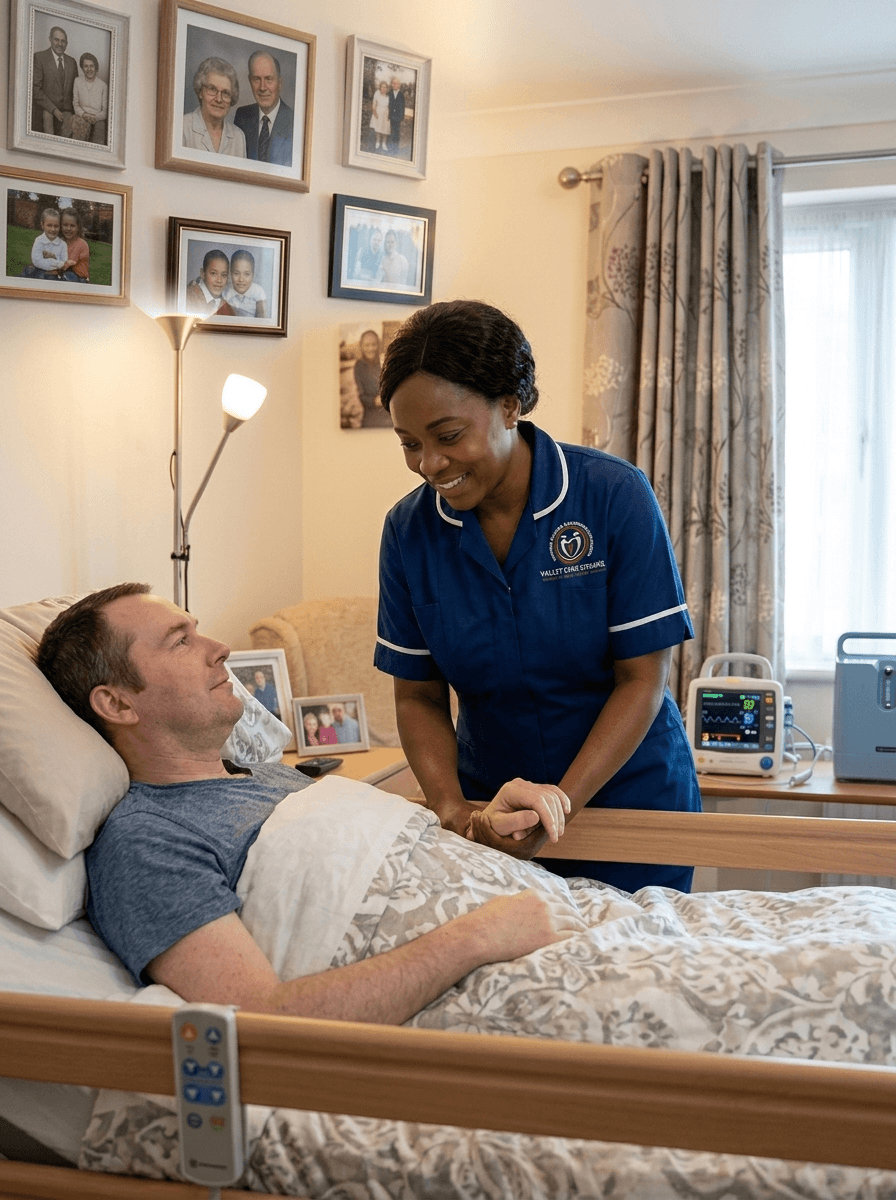
Talk to us about specialist brain injury care at home
Whether you are planning a hospital discharge, arranging rehabilitation support or looking for long-term complex care, our team is here to help.
Acquired brain injury care, completely tailored to you
An acquired brain injury, often shortened to ABI, is an injury to the brain that happens after birth. It may result from trauma or from a medical event that causes damage to the brain.
Traumatic brain injury can follow a road traffic collision, fall, accident, sporting injury or other trauma to the head. Non-traumatic acquired brain injury may occur following a stroke, reduced oxygen to the brain, infection, encephalitis, meningitis, brain tumour or another neurological event.
The effects of an acquired brain injury vary according to the nature, location and severity of the injury. A person may experience physical difficulties alongside less visible changes involving memory, concentration, fatigue, communication, emotional regulation, behaviour or executive functioning.
At Verity Healthcare, we look beyond the diagnosis to understand how the injury affects your individual day-to-day life.
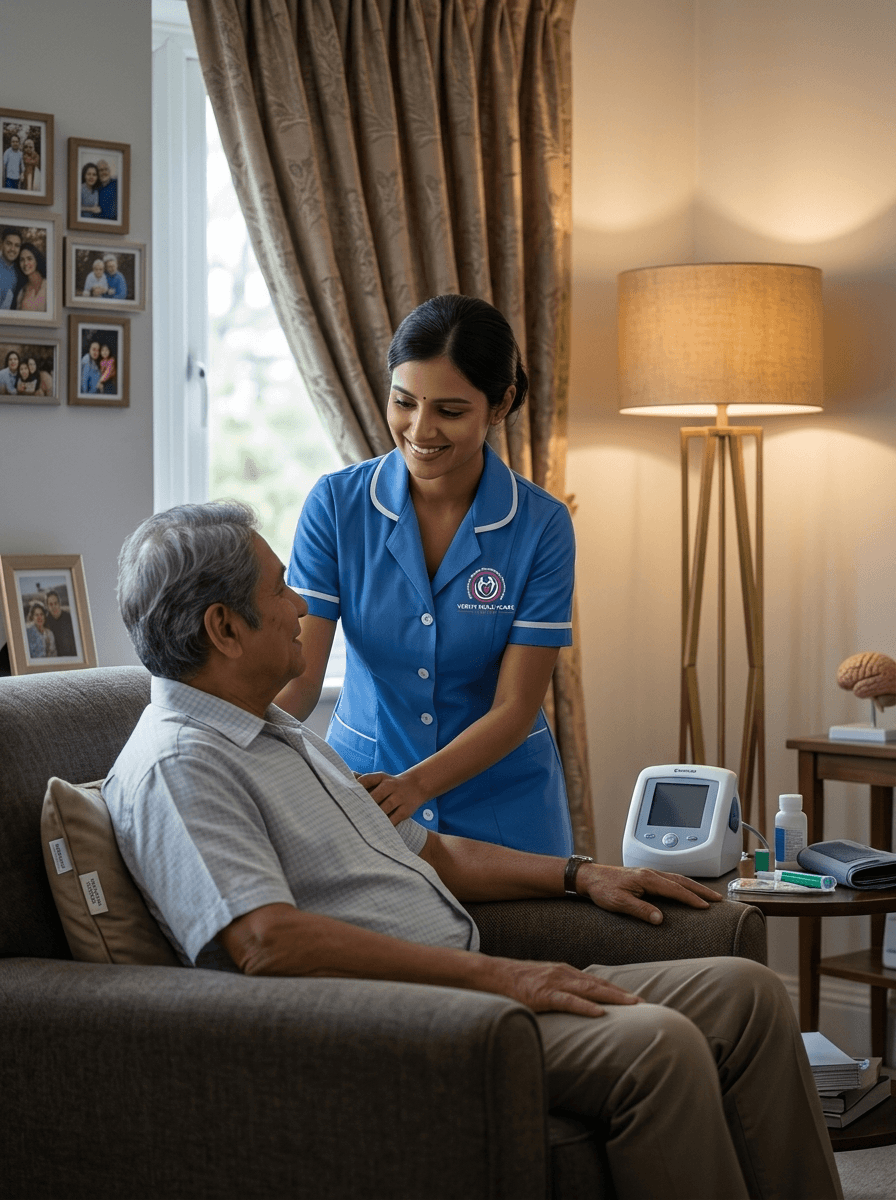
How acquired brain injury can affect everyday life
Physical changes
Brain injury can affect movement, balance, coordination, strength and mobility. Our carers can provide carefully assessed support that promotes safe movement while encouraging the person to retain or regain as much independence as possible.
Memory and thinking
Changes in memory, concentration, planning and problem-solving can make previously familiar activities more difficult. Consistent routines, prompts and individually agreed strategies can make everyday life safer and more manageable.
Communication
Some people experience changes in speech, language, understanding or expression. We adapt the way we communicate and follow strategies recommended by speech and language professionals where these form part of the person’s rehabilitation programme.
Behaviour and emotions
Brain injury can affect mood, motivation, impulse control and emotional regulation. Our approach focuses on understanding the individual, recognising potential triggers and providing calm, consistent and respectful support.
Fatigue
Neurological fatigue can have a significant effect on rehabilitation and everyday activities. Care can be organised around the person’s energy levels, priorities and recommended fatigue-management strategies.
Daily independence
Activities such as washing, dressing, preparing food, using transport, managing appointments or accessing the community may require additional support. We help people participate in these activities rather than automatically doing everything for them.
More than care. Support for life after brain injury.
Our role is not simply to complete care tasks.
We want the people we support to live, participate, learn, recover, reconnect and achieve personally meaningful goals.
That means recognising ability as well as need.
When someone can safely complete part of an activity themselves, we encourage that participation. When a skill has been lost, we can support agreed rehabilitation strategies to help the person practise it again. Where lasting changes require a different approach, we help establish new routines and ways of doing things that support greater independence.
Supporting brain injury rehabilitation at home
Home can play an important role in rehabilitation because it is where many of the skills a person wants to regain are actually used.
Preparing breakfast, getting dressed, managing a morning routine, remembering an appointment, walking to a local shop or making a drink can all become meaningful opportunities to practise independence.
Where an individual has a rehabilitation programme developed by appropriately qualified professionals, Verity Healthcare carers can support those agreed strategies during everyday care.
We can work alongside physiotherapists, occupational therapists, speech and language therapists, psychologists, neuropsychologists, specialist nurses, rehabilitation consultants and case managers to help translate rehabilitation goals into consistent day-to-day support.
The aim is straightforward: helping each person achieve the greatest level of independence and quality of life that is realistic for them.
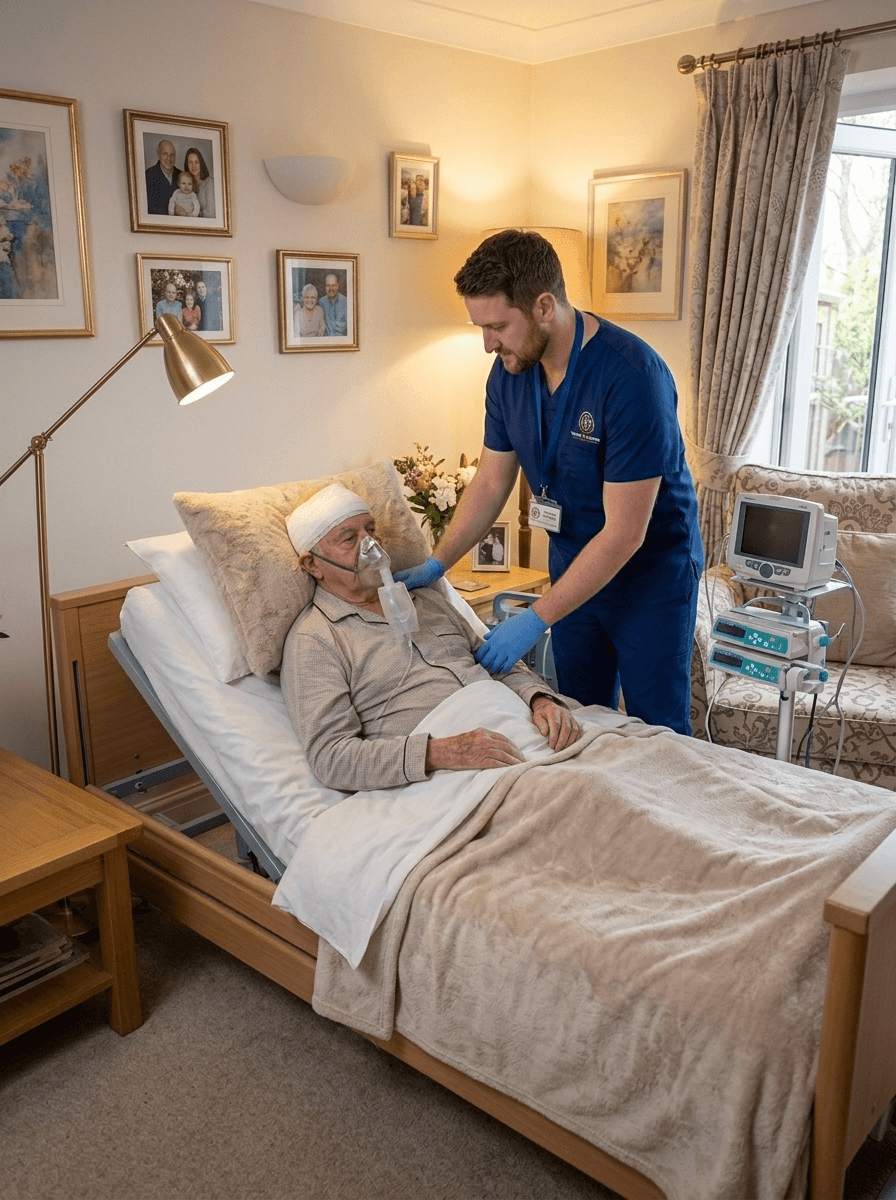
Planning a return home after a brain injury?
We can work with families, case managers, commissioners and healthcare professionals to plan a safe transition from hospital or rehabilitation services into the home.
Speak to our team today
Brain injury care that adapts around you
Visiting Brain Injury Care
You may only need support at particular points during the day. Our visiting care can be arranged around your normal routine, providing assistance with personal care, medication, meals, mobility, appointments, rehabilitation activities and community access while allowing you to retain a high level of independence.
Live-in Brain Injury Care
Where more continuous support is required, live-in brain injury care allows you to remain in your own home with a carefully matched care professional providing reassurance and assistance throughout the day.
Living at home can help preserve familiar routines, relationships and surroundings while providing the consistency that can be particularly important following a brain injury.
Complex & 24-Hour Brain Injury Care
Some acquired brain injuries result in significant physical, neurological or clinical needs. Where appropriate, we can develop more intensive support involving trained carers, nursing oversight and carefully planned clinical interventions.
The package is built around the person’s assessed needs rather than forcing the person into a standard model of care.
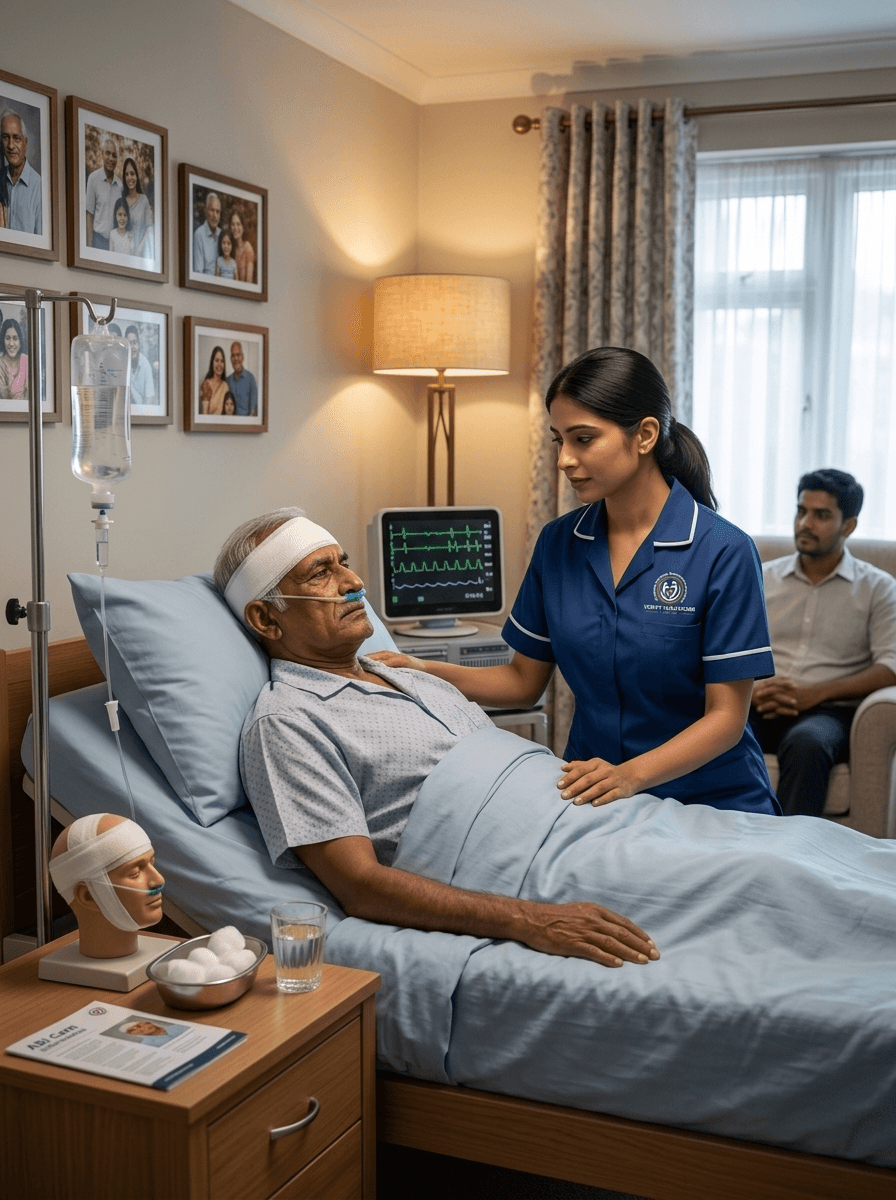
Expert brain injury care overseen by experienced nurses
When brain injury care becomes clinically complex, families need more than reassurance. They need confidence that care is properly assessed, planned, delivered and reviewed.
Verity Healthcare provides nurse-led complex care at home, with registered nurses and clinical professionals supporting the assessment of complex needs, care planning, staff training, competency assessment and ongoing clinical oversight.
Depending on the person’s assessed needs and professional instructions, a brain injury care package may involve support associated with enteral feeding, seizure management, continence care, positioning, skin integrity, respiratory needs, complex medication or other delegated healthcare interventions.
Clinical procedures are only undertaken where the appropriate assessment, care plan, training, competency and professional oversight are in place.
How our brain injury carers can support you
Personal care with dignity
Our carers can provide discreet support with washing, bathing, dressing, grooming and continence while encouraging you to remain involved in your own care wherever possible.
Mobility and positioning
We provide support with moving, transfers, positioning and mobility in accordance with your individual assessment, equipment requirements and moving and handling plan.
Medication support
From reminders and prompting to more comprehensive medication assistance, the level of support is determined by your individual assessment and medication care plan.
Nutrition and mealtimes
Your carer can support shopping, meal preparation, eating and drinking while following individual dietary requirements and professional guidance where swallowing or nutritional needs are more complex.
Memory and cognitive support
Consistent routines, prompts, calendars, electronic reminders and other agreed strategies can help people manage memory difficulties and organise everyday activities.
Community and social life
Recovery is about more than what happens inside the home. We can support you to attend appointments, enjoy hobbies, meet friends and family, access education or employment and remain part of your local community.
Positive support for cognitive and behavioural changes
Changes in behaviour after an acquired brain injury can be difficult for the person, their family and those around them. They may be linked to changes in memory, communication, executive functioning, frustration, fatigue, sensory overload, emotional regulation or the environment.
Our approach starts by asking what is happening for the person, rather than simply labelling behaviour as challenging.
Care plans can identify what helps the individual feel safe and understood, how they prefer people to communicate with them, situations that may increase distress, early signs that support is needed and the strategies that work best.
Where specialist behavioural or psychological plans are in place, our care teams can follow those agreed approaches consistently.
We promote positive, proactive support that protects dignity, respects human rights and seeks the least restrictive way of keeping people safe.
Call us today to arrange live-in care.
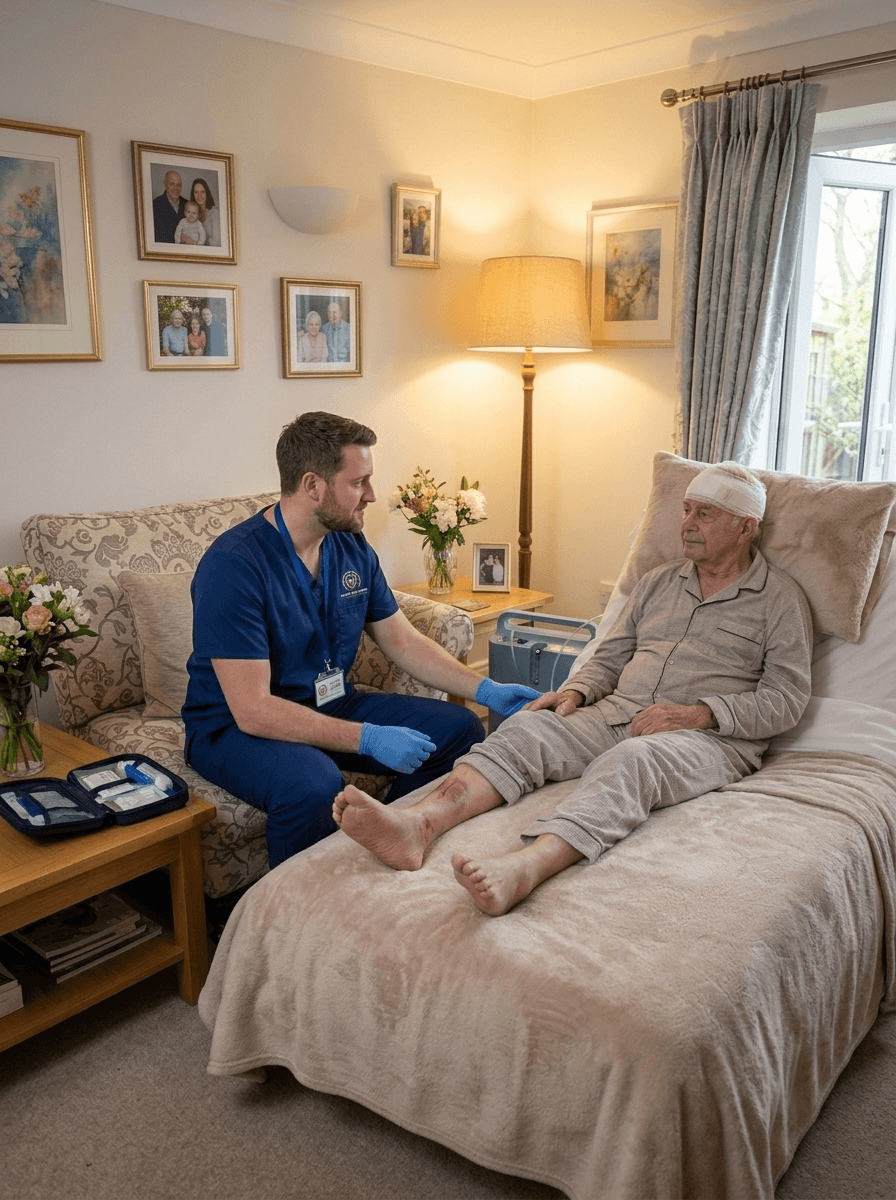
Helping you rebuild everyday independence
Rehabilitation often happens through small, repeated achievements.
Someone who previously needed a carer to prepare every meal may gradually begin choosing ingredients, preparing part of the food or making a simple meal using adapted equipment.
A person who required full assistance getting ready may progress to choosing their clothes, completing parts of their personal care or independently managing one stage of their morning routine.
For another person, progress may mean learning to use a reminder system, confidently travelling to a familiar location, returning to a hobby or reconnecting with friends.
These outcomes may look different for every person, but the principle is the same: we support people to do with, not simply do for.
Assistive technology for acquired brain injury
The right technology can help someone manage everyday life with greater confidence.
Depending on individual needs, this could include electronic reminders for medication and appointments, digital calendars, visual prompts, communication technology, personal alarms, falls detection, GPS-enabled devices, environmental controls or smart-home equipment.
Technology is most effective when it has a clear purpose and is introduced around the person’s abilities and preferences.
At Verity Healthcare, assistive technology can form part of a wider personalised care plan, complementing human support while helping the individual maintain greater choice and independence.
Brain injury care after hospital discharge
Leaving hospital or a specialist neurorehabilitation unit can be a major milestone, but returning home may also bring uncertainty for the individual and their family.
Verity Healthcare can become involved before discharge so that the right support is considered in advance.
We can liaise, with appropriate consent, with hospital teams, discharge coordinators, therapists, social workers, case managers and family members to understand the person’s care needs, routines, equipment, mobility requirements, medication arrangements, rehabilitation goals and identified risks.
Our aim is to make the transition into home care as safe, coordinated and reassuring as possible, with a clear care plan and appropriately prepared staff in place.
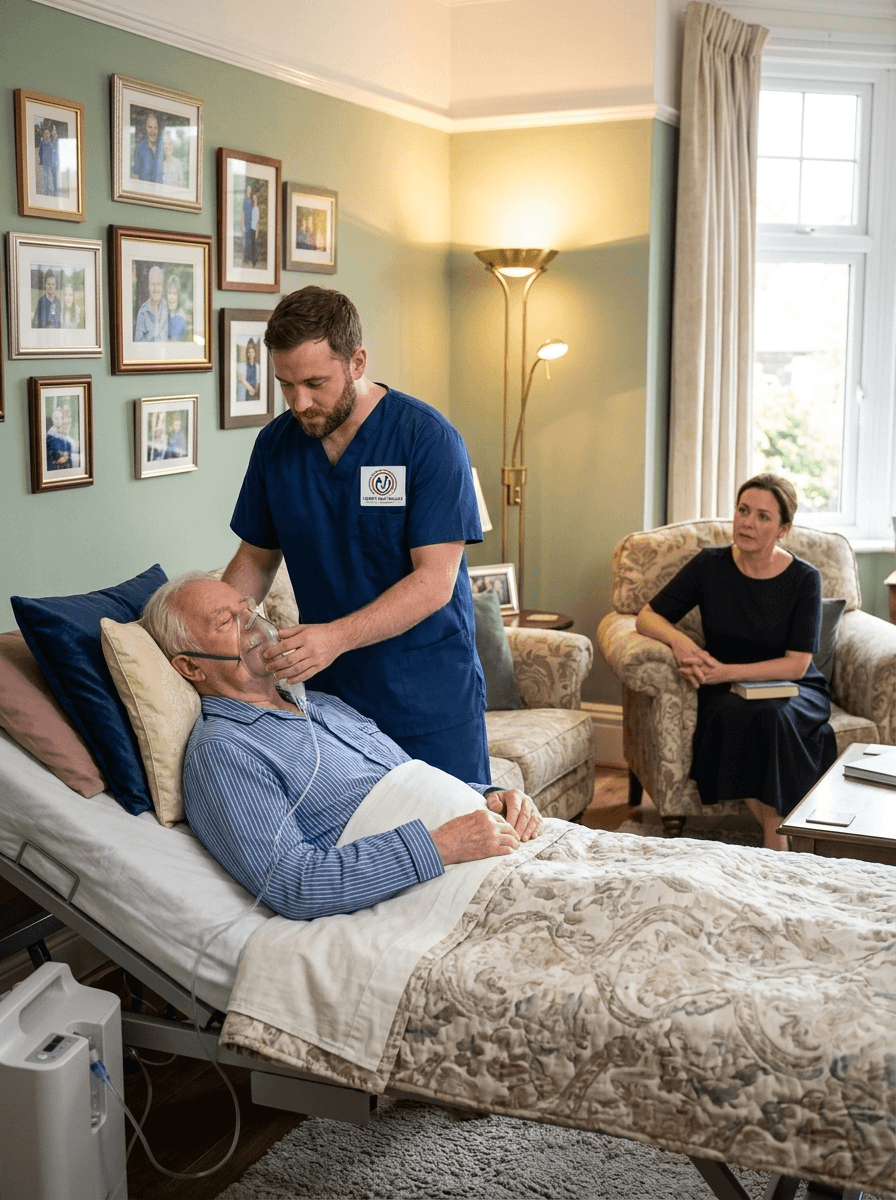
Working together around your rehabilitation goals
Brain injury recovery often involves more than one professional, which means good communication is essential.
With the individual’s consent, our care teams can work alongside the wider multidisciplinary team so that everyone understands the agreed goals and approach.
A physiotherapist may establish a mobility programme. An occupational therapist may focus on everyday activities and adaptive strategies. A speech and language therapist may recommend communication approaches. A psychologist or neuropsychologist may provide strategies relating to cognition, behaviour or emotional adjustment.
Our carers help bring those recommendations into everyday life by supporting agreed activities consistently in the person’s home and community.
This joined-up approach helps ensure that care does not sit separately from rehabilitation—it supports the person’s wider goals.
Call us today to arrange home care.
Who are Verity Healthcare?
Verity Healthcare is a CQC-regulated home care provider supporting children, young people and adults to live safely and independently in their own homes and communities.
Our services range from everyday visiting and live-in care to specialist nursing and complex care for people with significant health and neurological needs.
We combine compassionate care with strong clinical governance, personalised care planning and a commitment to helping people maintain choice and control over their lives.
For someone living with an acquired brain injury, that means creating care around the person they are, the life they want to lead and the outcomes that matter to them.
Why choose Verity Healthcare for acquired brain injury care?
Nurse-led expertise
Our nursing and clinical teams provide professional oversight when an individual’s brain injury results in complex healthcare needs.
Truly personalised care
We build support around your routines, preferences, abilities, risks and rehabilitation goals rather than expecting you to fit around a standard care package.
Rehabilitation-focused support
Our carers can reinforce professionally agreed rehabilitation strategies during everyday activities, helping turn goals into meaningful day-to-day progress.
Carefully matched carers
Consistency can be particularly important following a brain injury. We consider the person’s needs, communication, personality and required competencies when developing the care team.
Flexible support as needs change
Care can increase, reduce or change as the person’s recovery, circumstances and level of independence develop.
Regulated home care
Verity Healthcare is regulated by the Care Quality Commission, providing additional assurance around the management, safety and quality of the care we deliver.
Specialist carers for acquired brain injury support
Great brain injury care depends on much more than technical knowledge.
It requires patience, observation, empathy, consistency and an understanding that abilities can fluctuate from one day to another.
Our care workers are recruited for their values as well as their skills and undertake training, supervision and competency assessment appropriate to the people they support.
Where a care package involves specialist neurological, behavioural or clinical needs, additional preparation is arranged before staff undertake those responsibilities.
We also understand the importance of continuity. Familiar carers who understand the person’s routines, communication and responses can help create stability and build trusting relationships over time.
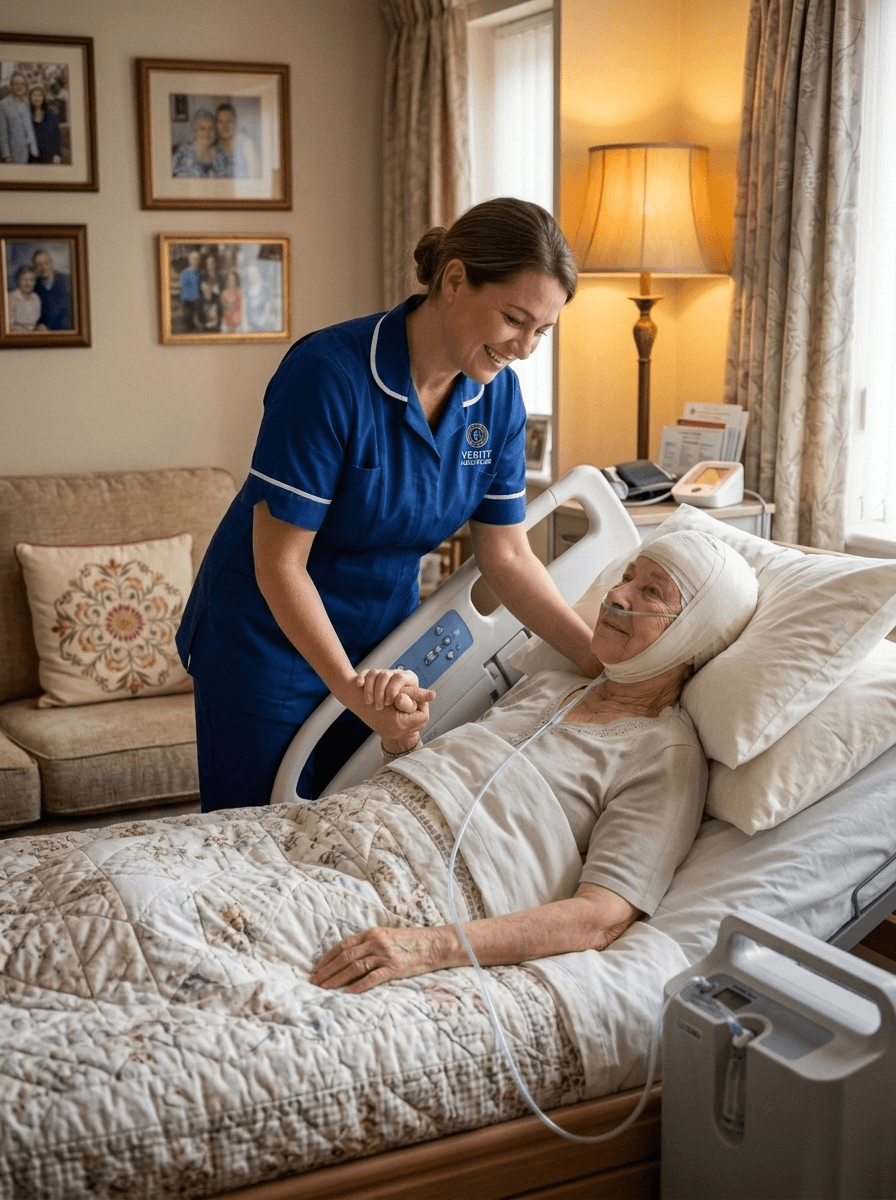
Experienced registered nurses
Verity Healthcare’s nursing and clinical professionals support the delivery of safe, effective and person-centred complex care at home.
For people living with an acquired brain injury and additional clinical needs, our nurses can contribute to assessment, care planning, risk management, staff competency, escalation arrangements and ongoing review.
This clinical oversight helps families, commissioners and healthcare professionals have confidence that complex support is structured around clear professional standards while remaining focused on the individual.
How to begin your brain injury care journey
1. Speak to our dedicated team
Call our friendly, knowledgeable team on 0330 0436 899. Tell us about the support you or your loved one requires and we will discuss the most appropriate next steps.
2. Free, no-obligation assessment
We take time to understand your current circumstances, brain injury, abilities, care needs, risks, routines and rehabilitation goals. Where appropriate, we can involve your family and relevant professionals.
3. Carefully matched care team
We create your personalised care plan and identify carers with the appropriate experience, competencies and personal qualities to provide your support.
Care is then monitored and reviewed so that it continues to reflect your changing needs and goals.
Call us today to arrange acquired brain injury care
Whether you require a few hours of support, live-in care or a specialist 24-hour package, talk to Verity Healthcare about creating care around you.
We're a fully regulated home care provider
Frequently asked questions about acquired brain injury care
Acquired brain injury care provides personalised support for someone whose brain has been injured after birth. The support required depends on how the injury affects the individual’s physical abilities, cognition, communication, behaviour, emotions and everyday independence.
At Verity Healthcare, ABI care is designed around the individual and may range from visiting support to live-in or complex 24-hour home care.
Acquired brain injury is a broad term describing damage to the brain that happens after birth. A traumatic brain injury, or TBI, is an acquired brain injury caused by external physical trauma, such as a fall, road traffic accident or impact to the head.
Other acquired brain injuries can result from medical causes such as reduced oxygen, infections, tumours or vascular events.
Yes. Depending on the person’s individual needs and risks, many people with an acquired brain injury can receive extensive support in their own home.
Home care can range from scheduled visiting care to live-in care and structured 24-hour support. Where complex clinical needs are present, additional nursing oversight and competency arrangements may be required.
Home care can complement a professionally developed rehabilitation programme.
Where physiotherapists, occupational therapists, speech and language therapists or other rehabilitation professionals have recommended specific strategies or activities, appropriately trained carers can help the individual practise and follow those recommendations during everyday life.
Yes. Verity Healthcare can provide personalised home care for people affected by traumatic brain injury, subject to individual assessment.
Support can address everyday living, mobility, personal care, cognition, communication, behaviour, community participation and complex health needs.
Yes. Live-in brain injury care may be appropriate where someone requires substantial support throughout the day but wants to remain in their own home.
The service is personalised around the individual’s assessed needs, routines and preferences.
Where an assessment identifies a need for continuous support, Verity Healthcare can consider a structured 24-hour care package.
The exact staffing model will depend on the person’s clinical needs, risks, waking-night requirements and level of support.
Yes, subject to assessment and the needs of the individual.
Our approach focuses on understanding why behaviours occur, identifying triggers, using consistent communication, following specialist recommendations and providing positive, person-centred support.
Yes. With appropriate consent, we can work collaboratively with case managers, hospital teams, community professionals, therapists, nurses and commissioners.
Joined-up working helps ensure that day-to-day home care supports the person’s wider rehabilitation and wellbeing goals.
Yes. Where possible, early contact is helpful because it allows time to understand the person’s needs, communicate with the discharge or rehabilitation team, prepare the care plan and ensure carers have the necessary skills before the person returns home.
Care can be short-term, rehabilitation-focused, long-term or lifelong depending on the person’s needs.
Because brain injury needs can change over time, we regularly review support and adjust the care plan where appropriate.
The cost depends on the type and level of care required.
Visiting care, live-in care and complex 24-hour packages have different staffing and clinical requirements. Following an assessment, we can discuss the type of care required and the associated costs.
You may also be interested in
Complex Care
Specialist, personalised home care for people living with complex health and clinical needs.
Nursing Care
Nurse-led care and clinical support delivered around the individual’s needs at home.
Spinal Cord Injury Care
Specialist home care supporting independence following spinal cord injury.
Live-in Care
Continuous personalised support that enables you to remain in the home you know and love.
After Hospital Care
Practical and personalised support for a safer transition from hospital back into everyday life.
Live your life beyond brain injury
An acquired brain injury can change how you do things, but the right support can help you continue doing the things that matter.
At Verity Healthcare, we combine compassionate home care, rehabilitation-focused support and clinical expertise to help people live with greater confidence, independence and choice.
Talk to our team about acquired brain injury care at home for you or someone you love.
We’re a fully regulated home care provider
We are proud to provide regulated, person-centred home care focused on safety, quality, dignity and positive outcomes.
[Retain Verity Healthcare’s existing CQC, ISO and accreditation logo strip here.]
Contact us today
Accreditation